Why Did Nobody Teach Me This at School?

What history should really teach
How a Spanish football shirt unexpectedly changed the way I think about history, education and the origins of our globalised world.

I recently bought a Spanish football shirt to wear at a bar while watching Spain’s 3:0 win against Austria on Thursday.

That simple purchase unexpectedly led me down one of the most fascinating rabbit holes I have explored in a while.

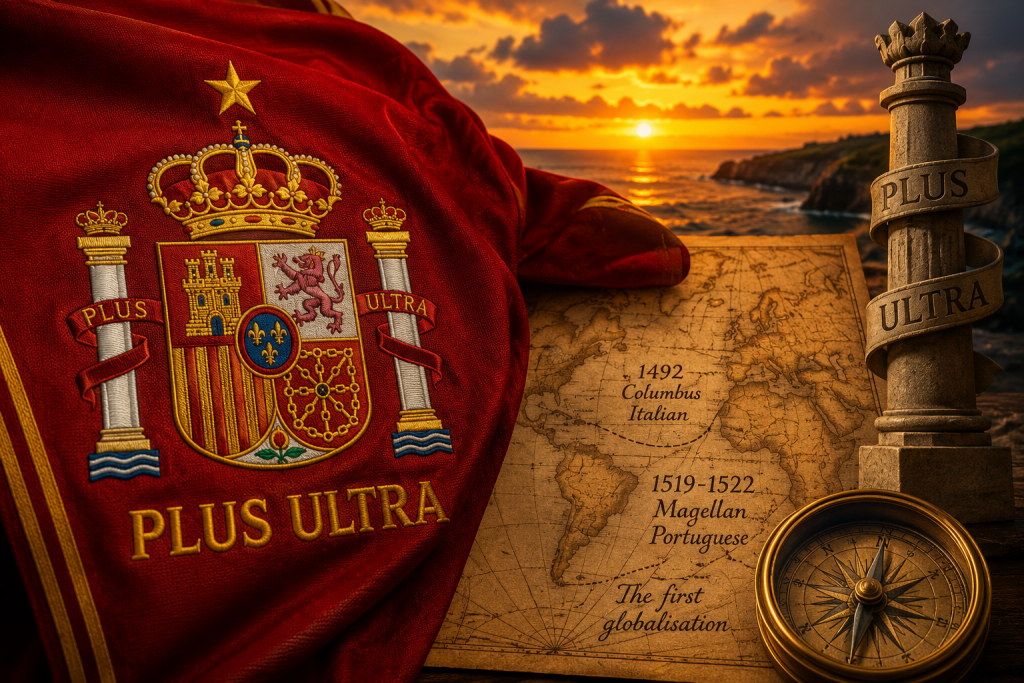
It began with two Latin words embroidered on Spain’s coat of arms: Plus Ultra.

I knew from my school-Latin what the words meant, further beyond, but I still needed some context to understand the meaning.

A little research revealed that they are a reference to the Pillars of Hercules at the Strait of Gibraltar. For the ancient world, these marked the edge of the known earth. The old warning was “Non Plus Ultra” nothing lies beyond.

Then came the voyages of exploration.

The warning became an invitation.

There was indeed more beyond.

That discovery prompted another question.

Christopher Columbus sailed for Spain. Yet I vaguely remembered reading somewhere that he was Italian. Was that right?

It was. I kept digging.

Born in Genoa, Columbus spent years trying to persuade different European rulers to finance his ambitious plan to reach Asia by sailing west. It was only when the Spanish Crown agreed to back him that history changed forever.

Then I discovered something even more surprising.

Ferdinand Magellan, whose expedition first circumnavigated the globe, wasn’t Spanish either. He was Portuguese. And he himself was killed in the Philippines before the expedition was completed.

Like Columbus, he simply happened to be sailing under the Spanish flag.

As I kept digging, I also learnt for the first time why America is called America and why the Pacific is called the Pacific. I learnt why Brazil speaks Portuguese while much of South America speaks Spanish, why Spain became one of history’s great global powers, how its sudden enormous wealth became a resource curse, and, most strikingly of all, how all these historical facts are mirrored in the events happening in the world today.

By now, all this led to another kind of question:

Why was I only learning this as I approach retirement?

None of these are obscure historical curiosities.

They explain the world we live in.


The more I thought about it, the more I realised that perhaps history has often been taught backwards.

Schools understandably devote considerable attention to national history. In Britain, we studied the Tudors, the Industrial Revolution and the Second World War. In Germany, where I spent many years teaching, National Socialism understandably occupies a central place throughout secondary education.

These are all profoundly important topics.

But too often history becomes an exercise in remembering names, dates, battles and treaties.

The examination rewards recall.

Real understanding often comes later.

History is not simply the story of what happened.

History can be the highly relevant explanation of why today’s world looks the way it does.

Why does almost an entire continent speak Spanish?

Why is Brazil different?

Why was Córdoba (Spain) once much bigger and more important than London?

Why are Europe and Latin America still so culturally intertwined?

Why and how did globalisation begin centuries before the Internet?

Those are historical questions too.

They just happen to illuminate the present rather than merely describe the past.


While I was training teachers at the University of Sussex, one of the finest history lessons I have ever witnessed contained almost no conventional history.

The young trainee teacher warned parents in advance that the lesson would be unusual.

She darkened the classroom. She played the sound of air-raid sirens followed by distant explosions. Beforehand, she asked the children to climb underneath their desks and lie silently on the floor with their eyes closed.

For several minutes they simply listened.

Afterwards she asked them to write, not about dates, military strategy or political leaders, but about how they had felt.

For a brief moment, those children had experienced uncertainty, vulnerability and fear. Not the reality of war, of course, but enough to begin imagining what it might feel like to be a child living through one.

I have forgotten countless historical dates since leaving school. I have never forgotten that lesson.

Nor, I suspect, have the children who experienced it.

That teacher wasn’t merely teaching history.

She was teaching empathy and vividly demonstrating how history is so relevant to life in the 21st Century.


As I have grown older, I find myself increasingly drawn to education that asks questions rather than rewards memorisation.

The same thought has appeared repeatedly in my recent writing about economics.

Financial literacy is not really about memorising definitions.

It is about understanding why economies behave as they do.

Likewise, history should not simply teach us to remember what happened.

It should help us understand why our world became what it is.

Perhaps that is why I have found these discoveries in Spain so unexpectedly exciting.

I wasn’t simply learning historical facts.

I was discovering connections.

The voyages of Columbus and Magellan were not isolated adventures.

They marked the beginning of the first great wave of globalisation.

Trade routes expanded.

Ideas travelled.

Plants, animals, diseases and cultures crossed oceans.

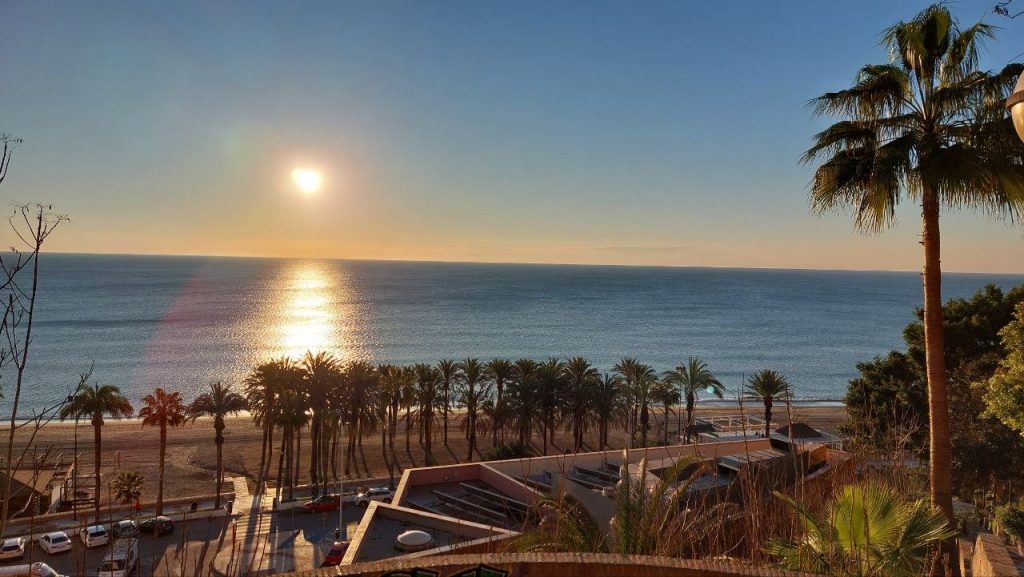
The Mediterranean outside my window here was once dry land – another fact I was unaware of. It is only thanks to the Zanclean Flood that water entered from the Atlantic through the Strait of Gibraltar and opened up the possibility of a future global trade highway.

The world became permanently interconnected.

Five centuries later we are still living with the consequences.

History also reminds us that no civilisation remains permanently at the top.


Sometimes I wonder whether schools unintentionally leave us with the impression that education ends when we pass our examinations.

In reality, the opposite is true.

The most rewarding learning often begins afterwards.

It begins when curiosity replaces obligation.

When we are no longer asking, “Will this be in the exam?”

Instead we ask, “Why did nobody ever explain this?”

Perhaps that is the real purpose of education.

Not to fill our minds with information.

But to awaken a curiosity that lasts for the rest of our lives.

“The real voyage of discovery consists not in seeking new landscapes, but in having new eyes.”
— Marcel Proust
Spain Governs Immigration. Britain and Germany Perform It.

Living Between Spain, Britain, and Germany

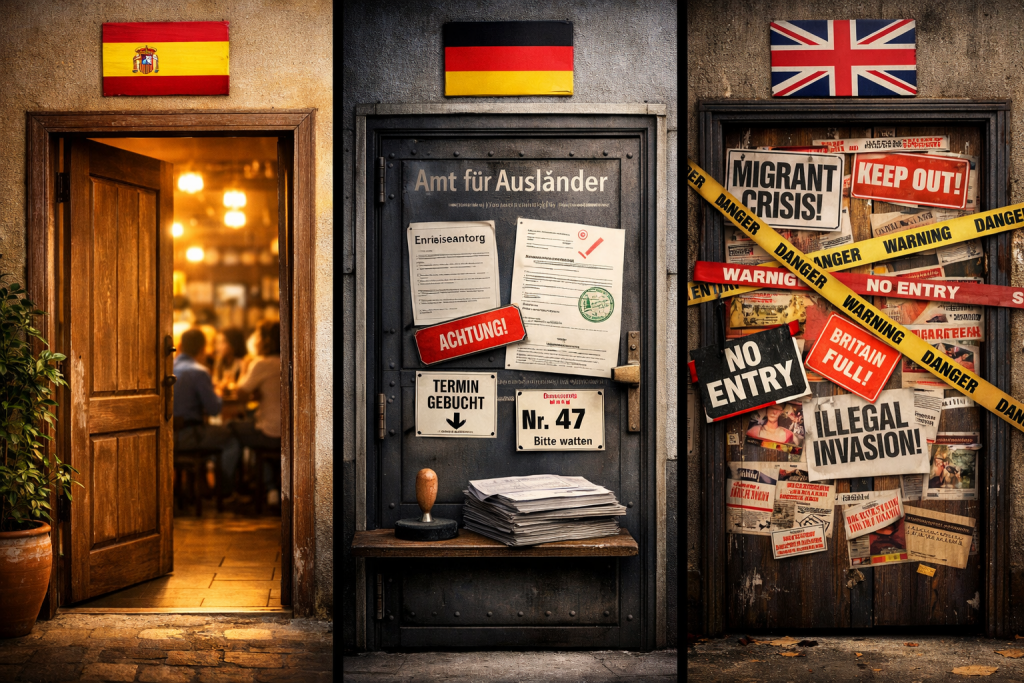
As a British citizen who has lived in Germany for fifteen years and who also has a home in Spain, I find myself moving between different moral climates when it comes to immigration. All three countries depend on migration. All three speak about it constantly. Yet they govern it with very different degrees of conviction.

Spain’s decision to regularise around half a million undocumented migrants has been widely described as bold. What strikes me more is that it feels principled. It reflects a style of leadership associated with Pedro Sánchez. Whether one agrees with him or not, he governs from a recognisable ethical framework. That framework informs domestic policy and foreign stances alike, including Spain’s willingness to articulate an independent position on Gaza. Immigration policy flows from that same seriousness. The law is being aligned with reality rather than used to perform toughness.

Germany approaches integration through procedure and moral discipline. This reflects a political culture now shaped by Friedrich Merz, a self-described capitalist whose flexibility seems to run in one direction only. Long-standing commitments are suddenly negotiable when it comes to rearmament, national debt, welfare retrenchment, or deportation rhetoric, provided wealth hierarchies remain untouched. The result is a system that demands compliance from the vulnerable while offering constant reassurance to capital. Integration becomes conditional, slow, emotionally distant, even hostile.

Britain’s problem is different but no less corrosive. Under Keir Starmer, the country is led by someone who claims a socialist inheritance but governs as a weathervane. Immigration policy shifts according to polling rather than principle. Positions harden according to headlines. The message to migrants is clear: you are needed, resented, and rhetorically punished all at the same time.

Spain, by contrast, currently shows a confidence that much of Europe lacks. It does not deny that immigration produces pressure. Housing shortages and exploitation are real. But regularisation is treated as governance, not surrender. Integration is understood as something that happens socially before it is certified administratively.

My own perspective here is sharpened by marriage. I am British, resident in Germany, and married to an Indonesian. After a year of marriage, my husband still has no residency or work permit in Germany. He is merely tolerated. In the UK, we cannot apply at all because I no longer live and work there. In Spain, later this year, he would have both residency and the right to work. Sitting together at Luca’s Café in Torremolinos, the contrast is impossible to ignore. Spain does not interrogate our presence. It respects us and welcomes us.

This difference is not accidental. It reflects political leadership. Confidence integrates better than fear. And at the moment, Spain is one of the few Western countries still willing to govern from that truth.

“Hospitality is not a gesture of kindness. It is a measure of political confidence.”
Jacques Derrida

Spain takes more refugees than Britain. So why isn’t Madrid screaming about it?


There is a strange and revealing truth at the heart of Europe’s migration politics, and it is this:

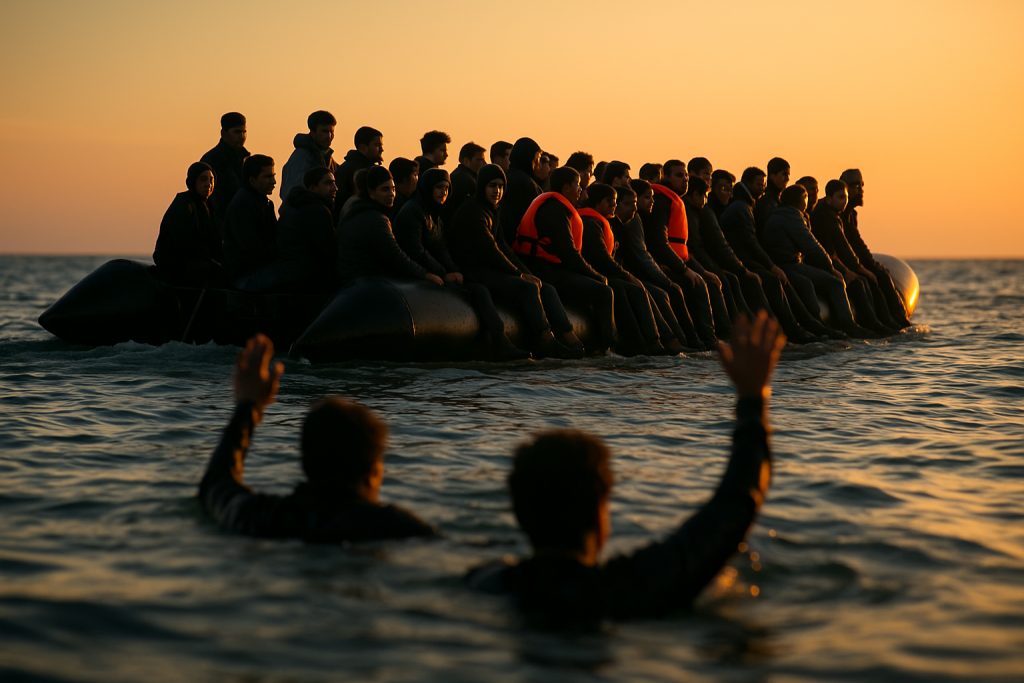
Spain receives more irregular boat arrivals than the United Kingdom — yet it treats migrants with more dignity, less hysteria, and far greater political maturity.

In 2024, Spain registered around 61,000 irregular sea arrivals.
The UK recorded roughly 37,000.

And yet, if you walked into a British newsroom or scrolled through British political Twitter, you would think that civilisation was on the brink of collapse.

Why is that?

Why does a country with fewer arrivals behave as though it’s under siege, while a Mediterranean frontline state quietly manages the reality without setting its national hair on fire?

The answer tells us something uncomfortable — not about migration, but about the moral core of modern British politics.


Spain: A Social Democracy That Still Remembers Its Soul

Spain has no illusions about its geographic position. If you sit at the hinge between Africa and Europe, people will come. Some are fleeing violence. Some are escaping poverty. Some are simply seeking a future.

Spain’s response is almost boring in its sanity:

  • Rescues at sea are organised, not weaponised.

  • Asylum processes function without turning every application into a national morality play.

  • NGOs and municipalities handle frontline integration without being smeared as traitors or “pull factors”.

  • And critically, Spain offers a legal pathway — arraigo social — that allows migrants to be regularised after two years, recognising the simple fact that if people are already living in your society, the most rational thing you can do is integrate them.

This is not naïveté.
It is pragmatic humanism.

A country that is actually under pressure has learned that panic makes everything worse — and that moral clarity and administrative realism are, in the long run, the only sustainable approach.


Britain: A Superpower of Performative Fear

Then there is Britain — a country with fewer boat arrivals, fewer border pressures, and incomparably more political theatre.

The new Labour government, elected on a promise of competence, has appointed a Home Secretary — an Oxford-educated politician who should know better — who has plunged headlong into the same punitive reflex that defined her predecessors:

  • Proposing visa bans on entire nationalities.

  • Reducing asylum processing time limits to the point of absurdity.

  • Recycling the rhetoric of American culture wars and Trumpian nationalism.

  • Treating refugees as a statistical nuisance to be minimised rather than as human beings with stories, trauma, and dignity.

This is not the behaviour of a confident nation.

It is the behaviour of a country addicted to manufactured panic, because panic is the last remaining tool in its political toolkit.

Britain no longer has a coherent economic model.
It no longer has a unified social vision.
And its political class no longer has a narrative of who the country is, or what it stands for.

So it turns to the only story it has left: fear of the outsider.


The Moral Collapse of British Labour

The tragedy here is not simply that Labour has adopted conservative immigration framing.

The tragedy is that Labour has forgotten its own genealogy.

Social democracy — the European kind, the post-war kind, the moral kind — was built on a simple conviction:

The health of a society is measured by how it treats the stranger.

This was not an abstract ideal.
It was a lesson drawn from genocide, fascism, war, and displacement — a recognition that if Europe was to rebuild itself, it needed a political ethic grounded in solidarity, not exclusion.

Spain, with all its imperfections, still remembers this.

Britain does not.

The Labour Party of today triangulates itself into oblivion, chasing right-wing voters who will never love it, and sacrificing the values that once made it a moral force in world politics.

A Labour Party that governs by fear is not Labour.
It is simply a softer mask on the same punitive instincts that have now defined British immigration policy for twenty years.


Migration as a Mirror

Migration does not destabilise nations.
It exposes them.

Spain’s handling of higher arrival numbers reveals a society that, despite its flaws, still has a functioning moral compass and a political class capable of distinguishing reality from theatre.

Britain’s handling of fewer arrivals reveals something far more troubling:

A nation with no confidence in itself, no stable identity, and no political imagination.
A country performing toughness because it no longer knows how to perform leadership.
A Labour Party performing cruelty because it has forgotten how to perform justice.


A Simple Truth Worth Saying Out Loud

A country does not drown because desperate people cross its waters.
It drowns when it forgets who it is.

Spain, for all its pressures, has not forgotten.
Britain, tragically, has.

And until the Labour Party recovers its moral centre — the centre that once made Britain a pioneer of compassion, dignity, and internationalism — its immigration policy will remain nothing more than an anxious shadow of its own lost ideals.

“The moral test of government is how it treats those who are in the dawn of life, the twilight of life, and the shadows of life.”
Hubert Humphrey

Room 911: A Tale of Two Holidays

This is a short story I wrote when I was 17 on holiday in Spain. I hope you enjoy it. 

Room 911

A Tale of Two Holidays

‘Cabin crew, doors to manual.’

‘At last,’ sighed Paul as he unclipped his seatbelt.

The two-and-a-half-hour flight to Malaga had been an endurance test: three cramped seats in the back row next to the toilets; a turbulent climb out of Gatwick that rattled his nerves; two female pilots at the controls ; emphatically gay stewards; and, worst of all, two businessmen — Dutch, perhaps — who had spent most of the flight standing in the aisle, bellowing corporate plans in harsh, broken English.

Directly in front of him, an obese bald man had snored from take-off to landing with astonishing force.

How on earth did he not wake himself up? Paul coughed, jiggled his knees into the back of the seat, shifted noisily. Nothing worked.

Still, at least Jamie had been good.

His seven-year-old son had fallen asleep in the car on the way to Gatwick, then spent most of the flight happily playing Angry Birds on Paul’s iPad, munching Pringles, sipping J2O.

‘Got everything, Jamie?’ Maddie asked as she pulled down her coat and suitcase.
Jamie nodded, his large, chocolate-brown eyes catching triangles of white sunlight streaming through the aircraft windows.

Paul glanced at Maddie and thought back to their first encounter. Six months ago, on the Northern Line, they had been pressed together in the rush-hour crush. She had turned away shyly, her bobbed brown hair catching the carriage’s fluorescent light, her perfume — citrus with something woody beneath — cutting through the stale air.

He had noticed her avoidance, her embarrassment, and in that moment he had been struck by how long it had been since a woman had stirred anything in him. Not since the sudden death of his wife.

The awkward bump at Elephant and Castle had pushed Maddie’s slim frame briefly against his. She’d pulled away with a flustered smile, apologised, but Paul had taken it as a sign. Out of that accidental intimacy, a relationship had grown: dinners, films, music they both liked. Maddie had become a steady presence in his and Jamie’s life.

And now here they were — their first holiday as a makeshift family. A trial run at happiness.

As they shuffled down the aisle, a sudden sulphurous stench hit them. The obese man had broken wind.

‘Oh, Dad!’ Jamie whispered urgently. ‘Was that you?’

Paul grimaced and pointed towards the man, who was now speaking loudly in German to his tall, athletic son. As the man reached up for a suitcase, his bright green Adidas t-shirt rode up, exposing a vast balloon of pale stomach spilling over his belt. Jamie stared, fascinated and repelled.

They disembarked into the glass terminal, bathed in Andalusian sunlight. The sky was cloudless, the heat already rising, promising days of beach, pool, and warm evenings on the promenade.

Jamie lingered to look back at the Airbus 320. From one of its engines, he thought he saw thick black liquid dripping — oil, perhaps. Three men in overalls and the pilot stood below, pointing and gesturing in stress. To Jamie, it looked like his parents when they argued.

They collected their bags and stepped outside into the fierce sun.

‘El hotel Don Pablo, por favor,’ Paul told the taxi driver, proud of his phrasebook Spanish.

The taxi sped along shimmering tarmac, past a beer factory, down towards the tideless Mediterranean. The Don Pablo stood above the promenade, palm trees swaying between busy chiringuitos, rollerblading children weaving through strolling couples.

‘You’ll love it here, Jamie,’ Maddie said. ‘There are always lots of children. You’ll make friends.’

They checked in, took the lift to the ninth floor, and unlocked Room 911. Jamie swiped the keycard with the excitement of Christmas morning.

The smell hit Paul instantly: the nostalgic mix of stale suncream, faint bleach, warm varnished furniture — the essence of childhood holidays.

Above the bed hung a tapestry of the Last Supper.

‘Is that Jesus, Dad?’ Jamie asked.
‘Yes.’
‘And the one leaning on him — that’s Judas, right? The friend who betrayed him?’
‘Yes, son, that’s right.’

‘No,’ Maddie corrected softly. ‘That’s John, his closest friend. Judas is the one holding the bag of money.’

‘Really? Whatever,’ Paul muttered, impatient.

‘If Jesus was God, Dad, why did he have to die?’ Jamie pressed.
Paul hesitated. ‘I don’t really know.’
‘Maybe it was to show how much he loved us. Like Mum,’ Jamie said quietly.

Paul shot a glance at Maddie. Jamie, sensing he had touched a nerve, snatched up Terence, his Angry Birds toy, and bounded onto the balcony.

‘Look, Terence, the sea!’ he announced.

Below, families clustered around the pool, children splashing while parents dozed on sunbeds. Across the road stretched the beach, waves crashing harder than seemed reasonable on such a windless day.

‘Dad, why’s the sea so rough if there’s no wind?’
‘It’s the moon,’ Paul declared confidently. ‘It pulls on the sea like a magnet.’
Jamie nodded, satisfied.

Later, by the pool, they noticed the German man again — the snorer from the plane. With him sat his wiry son, a blonde woman with broad shoulders, and a pretty girl on the brink of adolescence. Jamie watched her flick her hair with unconscious poise, then turned his attention back to the pool.

The boy introduced himself. ‘I’m Lukas. We live in London. My dad is a doctor. He works in Africa sometimes.’ He grinned. ‘I’m nine. How old are you?’
‘I’m seven,’ Jamie replied eagerly, and they plunged together into the freezing water.

Over the next days, Lukas and Jamie were inseparable: pool, beach, games, laughter. Sometimes Lukas’s sister, Carla, joined them with her endless silly jokes that made Jamie laugh harder the less funny they were.

One afternoon the families shared lunch at a chiringuito. Maddie warmed to Petra, Lukas’s mother, and they talked about raising children abroad. Paul listened to Dominik — the German father — tell stories of medicine in Africa.

They were humbling tales, full of lives saved and lost. Paul felt suddenly small, his job in Shell’s London office seeming shallow by comparison. He also noticed how little Dominik ate, despite his size. Dominik explained, matter-of-factly, that a rare glandular disease made him obese regardless of diet or exercise.

Paul was chastened; his prejudices felt mean and petty in the face of the man’s quiet dignity.

As they lingered over coffee, Jamie piped up. ‘Dad, didn’t you say the moon makes the waves? But it isn’t windy…’

Dominik smiled, poured mineral water into a saucer, and tilted it until the liquid sloshed over the rim.

‘The Mediterranean is like this basin. The water slops because of the earth’s rotation. And some waves start far away, where the wind is stronger than here.’

‘Oh,’ Jamie said, disappointed but thoughtful.

The next day, Paul and Maddie decided to stay at the hotel. They were tired, and perhaps — Paul hoped — ready for some time alone.

‘Please, Dad, can I go to the beach with Lukas? It’s their last day!’ Jamie begged.

Paul hesitated, then caught Maddie’s eye. The look they shared made his decision.

‘All right,’ he said. ‘But be careful.’

Jamie hugged him tight. ‘Love you, Dad.’ Then he grabbed his towel and flip-flops and ran towards the beach, smiling all the way.

Back in Room 911, Paul and Maddie lay together, finally free of interruption. The midday sun pressed against the balcony doors, and outside the sea continued its ceaseless rhythm.

On the beach, Jamie waited by the water’s edge. Lukas wasn’t there yet. He stepped into the waves, remembering Dominik’s saucer, thinking how the sea slopped and pulled, alive with its own hidden force.

Above, Paul and Maddie surrendered to their closeness, lost in each other. Their pleasure also came in waves. Breath-taking undulations, larger and larger and louder and louder.

Seconds later came the largest and loudest wave of all, furious, foaming, final. And not unlike the one that, at that very moment, came crashing over Jamie, carrying his small body out into the indifferent sea.