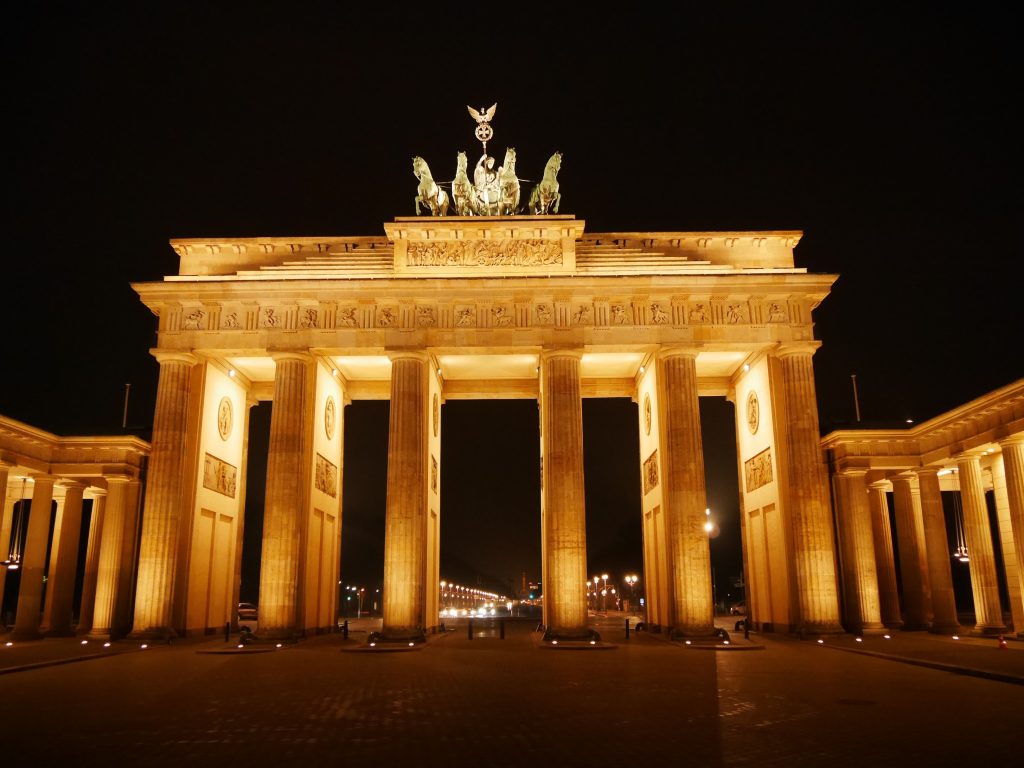
Our Banana Pancake journey finally started from Malaga airport at 7:00 am on Tuesday 22nd September. Not to Bangkok via Doha, but Doha and Bangkok via Berlin. It’s a long story and yes, immigration issues are in there somewhere. Our easyJet flight was on time, as usual. I like easyJet. They feel professional for a so-called budget airline, and ethical too, offsetting every flight’s carbon footprint in the price of your ticket.
When I once flew with them on Christmas Eve, the stewardess gave me a free meal and happened to mention that only staff who volunteer to work over Christmas are placed on the rota, so that staff with children can be with their families.
Only twice in the last 18 years has my flight with them been delayed. The first time I was given free overnight accommodation in an airport hotel, and the second time I received 400 euros compensation within a week of applying.
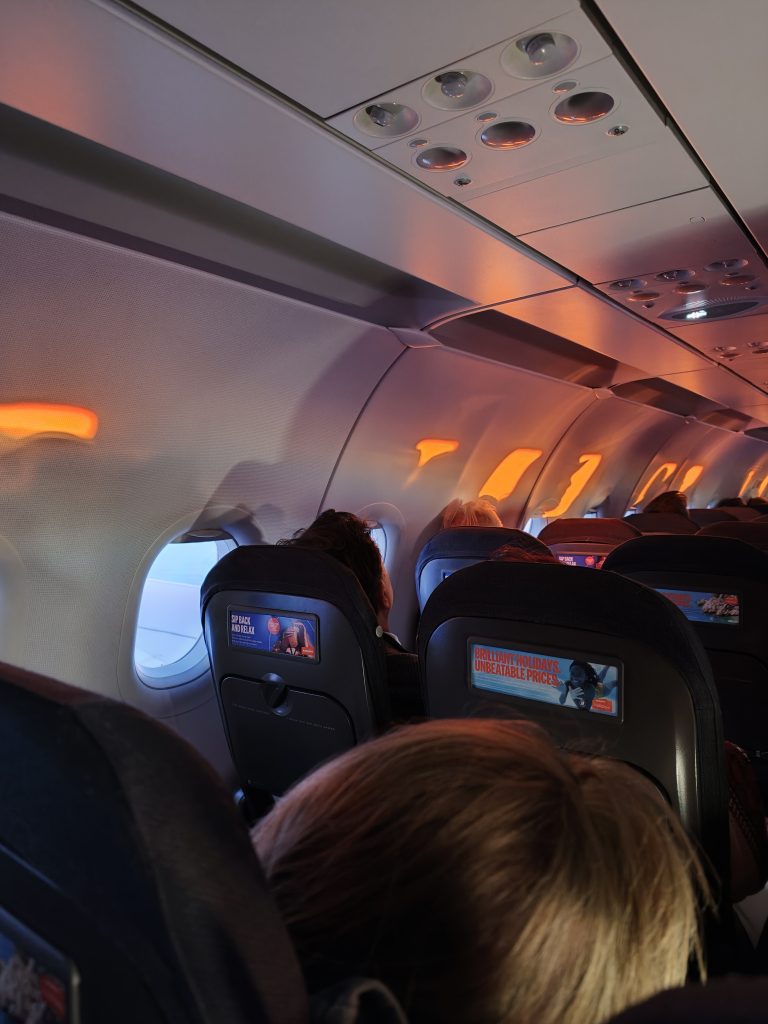
Anyway, our flight from Malaga to Berlin was smooth and we were treated by the universe to a glorious sunrise that flooded the cabin from starboard to port with a deep orange that matched the airline’s livery.
They say that travel brings out both the best and the worst in people. In me, it breeds intolerance bordering on arrogance. I get annoyed by the Germans who always line up to board the plane well before the gate opens, or even before the inbound plane has arrived at the gate. They always appear grumpy and stressed, and nothing is as good as it is in Germany. It’s not culturally different, interesting or challenging. Just “nicht so gut wie bei uns in Deutschland.”
The men complain about the Speedy Boarders while their wives, peering over their 1970s spectacles, complain about the lack of organic food at the Spanish airport. On the plane, they are silent, often reading thick books until they pause and open their Tupperware for a home-made wholemeal sandwich with cheese, salami and gherkin that wafts the smell of smoked meat, garlic, pickles and wholewheat across the nearest three rows of the plane.
By contrast, the Spanish never stop talking for three and a half hours, even if they have to shout across the aisle or to people in front of them or behind them.
When the plane lands, the Germans undo their seat belts before the plane comes to a halt and they stand up well before the gangway is extended, as if they will be first off the plane, even though they are seated in row 29.
And who is that nice young man on easyJet flights who makes the announcements these days, warning you that things could drop out of the overhead lockers and fall on your head? He is the perfect blend of northern and southern, gay and straight, young and old, soothing and serious. I would love to meet him one day, maybe for a nice French meal. Then he can remind me to check that my oysters are alive before I eat them.
As I stood up at the correct moment to collect my small rucksack from the overhead locker, a German woman standing behind my seat tutted and rolled her eyes. Ten seconds is clearly too long for a rucksack retrieval. I smiled and wished her a nice day, feigning a Stuttgart dialect, certain that she does not — along with all Berliners — like Swabians.
We disembarked, collected my larger rucksack from the suitcase conveyor belt and descended into the bowels of the airport to catch the S-Bahn into the city. In Berlin the sun was shining and the colours were not yet autumnal. Only the horse chestnut trees were brown due to the city’s persistent moth disease. Life felt great. For five minutes, anyway.
Two disguised ticket checkers had boarded the train at the airport and checked our tickets. They usually do in this region. In Berlin, the airport is cunningly located in zone C. Tourists logically buy a ticket for zones A & B for the city centre, get inspected while the train is still in zone C, and are then forced to pay a 60-euro on-the-spot fine for not purchasing a zone C ticket. It is estimated that Deutsche Bahn makes several million euros per year out of this scam. Of course, I knew better after living for 16 years in the coolest capital city in Europe. Only I was wrong. My husband’s BVG app had failed to validate his ticket for zones A & B, even though we were still in zone C, rendering the zone C extension ticket he bought invalid, so he had to pay the 60 euros fine. Et voilà, willkommen in Berlin! Technological failure is not an excuse according to Book 3, paragraph 367a, Section II, Annex B of the Berlin public transport law, and no matter what I said to the ticket checkers, I knew I was wasting my time. We paid the 60 euros — one week’s accommodation for two in a hostel in Laos blown for doing nothing wrong.
This threw me into a bad mood. My hatred for everything German came to the fore. The fine metamorphosed into my dislike of the nation’s xenophobia. This in turn became the lens through which I saw the rest of the day. I noticed how, for example, all the workmen digging holes in the streets were immigrants, yet their forewomen — the only staff wearing safety helmets — were all German.
This in turn led to visions of Friedrich Merz giving recent speeches about how all immigrants need to be deported and returned to their home countries, especially the one million Syrians like my friend Mariana who have learnt German, found jobs and settled here. Syria, so Merz tells Germany, is now safe and a nice place to live. I wonder whether he would like to live there?
I am glad that Merz will be gone soon. Auntie Merkel was dead right about him all along. And I know for sure he’ll be gone soon because he’s absolutely assured us that he’s staying on. Just like Starmer and all the others.
While I was seething with anger, we met up with my middle son and daughter in a Vietnamese restaurant near Kotti and were welcomed with such warmth and genuine customer service. All in English, since German automatically induces tension into any given situation. I think that might be because you have to keep waiting for those damn verbs at the end of the sentence. My anger began to subside. One waitress even sat down with us to tell us about the best tourist sites in Vietnam when we mentioned that we were hoping to go there. I think I’m going to like Vietnam.
After lunch, we started our journey to south-east Berlin to check in to our hotel. Of course, then came that special moment, completely out of the blue — a “Berlin moment”, as I call it — when the city provides you with a visual clue to what life is really all about. Something that you will literally never forget, like childhood ice cream and granddad’s slippers by the fire.
It happened at Warschauer Straße station, that incongruous oasis for artists, students, Aussteiger and vegans next to the Oberbaumbrücke. As we walked across the bridge between the overground U-Bahn and the underground S-Bahn, we saw an immigrant man begging for money. His body was absolutely prostrate, with his head between his outstretched arms, his hidden face touching the beer-ridden concrete and a paper cup in front of his head. A destitute old man in a wheelchair rolled up, took some money out of a small plastic bag and threw it into the paper cup.
When we got to the last stop on the 68 tram line, we still had to walk for 15 minutes through the forest along the River Dahme to get to the hotel. True, I admit that I hadn’t researched where the hotel actually was. I had booked it in a hurry. The city was full of marathon runners that week. The path seemed endless. My husband wondered whether we would be murdered. Not helped by seeing an isolated building that looked just like Dexter’s apartment.
Yet that same walk through the forest had a different effect on me. I heard the wind blowing through the trees and the river lapping against the nearby shore. I could smell pine in the cool, dry air. Some geese screeched as we startled them, darting into the river with a disproportionate splash.
I was transported to my student days in Baden-Württemberg, where I had first learned to go on long walks and enjoy nature. A time when my future seemed certain, replete with endless promise. Germany was formative and, even if I tried to leave it behind, it would always go with me. Its music, its language and literature, its nature, its respect for personal space and its punctuality.
I didn’t hate Berlin; I loved it. I was so grateful for everything it had taught me, and being back here, in this forest with my husband, made me realise how much I’d missed it after my move to Spain.
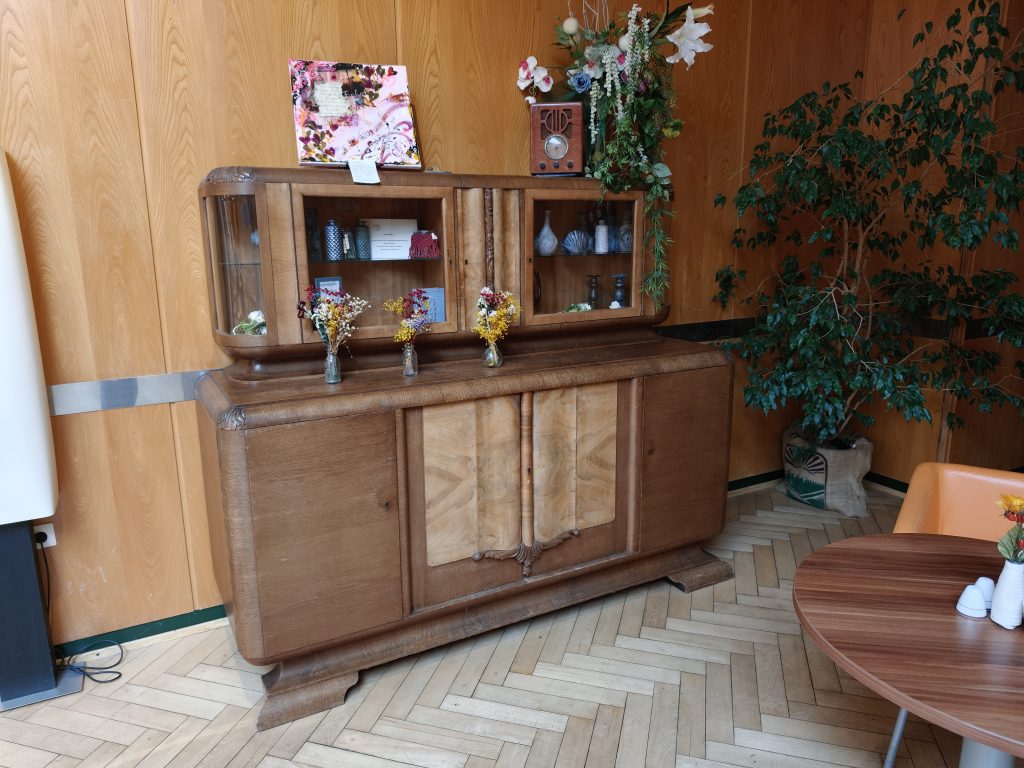
We checked in. The hotel was an unexpected homage to Cold War history. A prefabricated, former East German hostel for communist agricultural workers. Every room, every corridor was identical. Every room the same size. Fluorescent lights on the bedroom ceilings. A conference room still named “Dolmetscherloft”, with a glass booth for the interpreters translating meetings between Russian and German.
The furniture was from the former GDR too, like the film set of Good Bye, Lenin! My Indonesian husband had a different view. “It reminds me of a psychiatric hospital, like One Flew Over the Cuckoo’s Nest.”
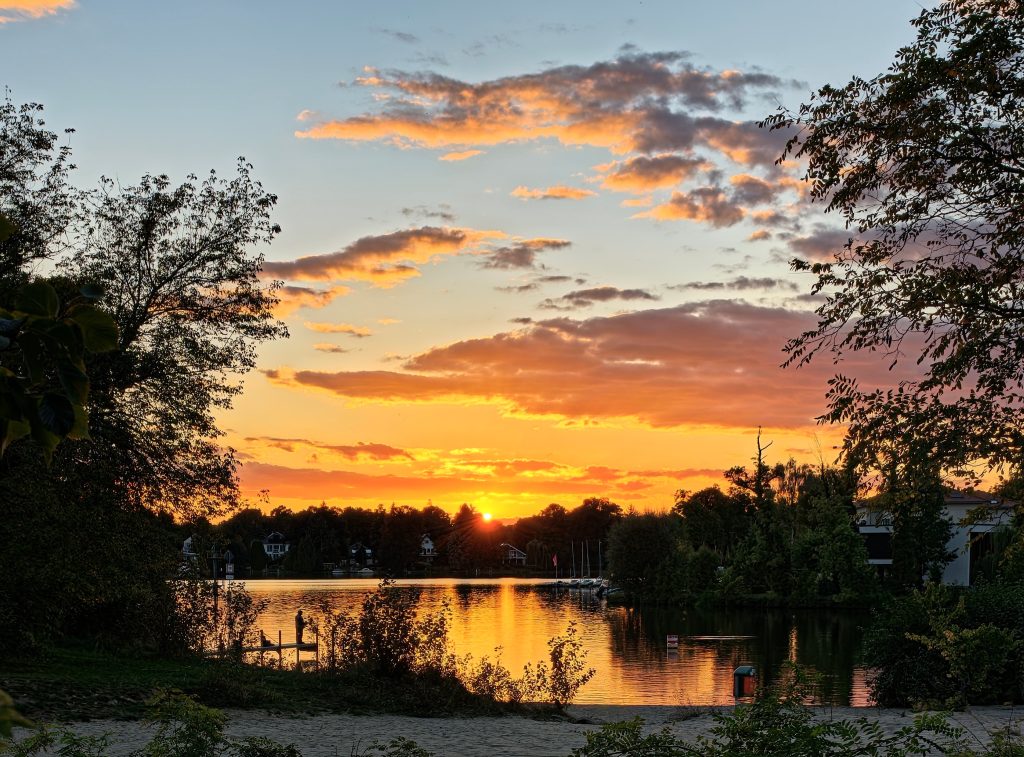
After putting our luggage in our room, we went down to the water’s edge, where there was a beach bar with deck chairs, hammocks and Baltic Strandkörbe. Chill jazz was playing in the background. A young couple bathed naked. Across the rippled mirror of water, elegant houses designed by avant-garde architects stood with glass walls overlooking the river. Their owners’ speedboats were moored at the bottom of the gardens.
We sank into deck chairs and drank Bionade. The German women complaining at Malaga airport would have approved. We sat in silence and watched the sunset. Yes, only Berlin, out of all the capital cities in the world, can offer you this. I raised my bottle and said under my breath, “Cheers to the man in the wheelchair.”
“Die Berliner sind unfreundlich und rücksichtslos, ruppig und rechthaberisch, Berlin ist abstoßend, laut, dreckig und grau, Baustellen und verstopfte Straßen, wo man geht und steht – aber mir tun alle Menschen leid, die nicht hier leben können!” — Anneliese Bödecker