False Fundamentalism: Erasmus v. Luther

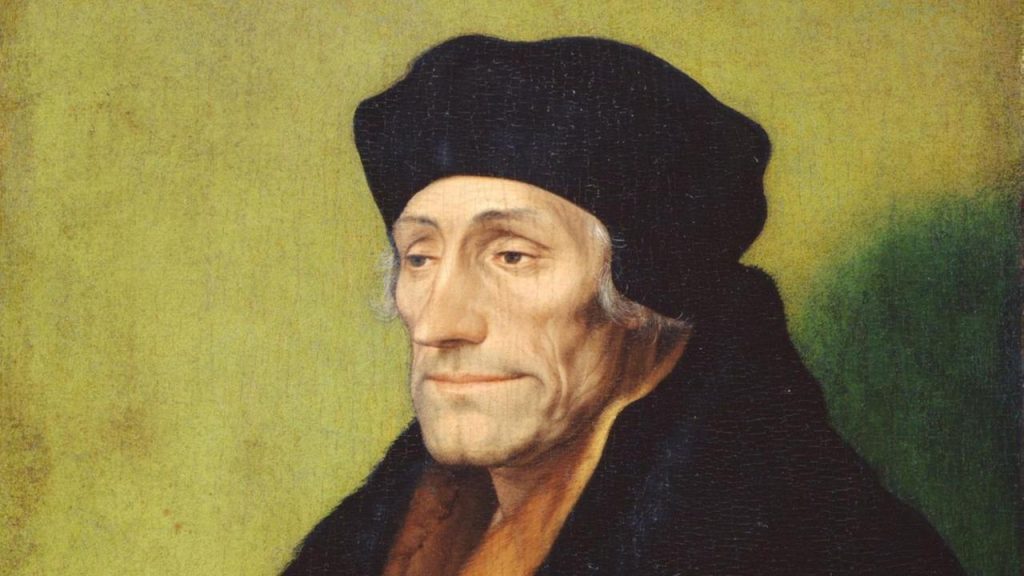
Hans Holbein the Younger, Portrait of Erasmus of Rotterdam

Erasmus of Rotterdam (1466–1536) is often regarded as the pioneer of historical-biblical criticism — a discipline that continues to polarise attitudes to the Bible today.

A highly gifted academic, a Catholic priest, and in many ways one of the first genuine citizens of Europe, Erasmus was also the illegitimate son of a priest. Both his parents died of the plague when he was a teenager. These hardships helped shape his lifelong belief in synergism (salvation is a work of both  God and human co-operation), in contrast to the monergism (salvation is a work of God alone) preached by Luther and many Protestants since the Reformation.


Erasmus the Humanist

Erasmus was a pacifist who wanted Christianity to be lived out in daily practice. He feared that Luther’s belligerence would fracture the church — which is exactly what happened. Yet Erasmus was also a product of his time: a humanist who sought to move faith away from lofty scholastic debates and root it once again in the lives of ordinary people.

That concern drove him to produce accurate translations of the Bible from authentic manuscripts, placing them into the hands of ordinary believers.


The Problem of the Vulgate

For centuries the church relied on the Vulgate, a 4th-century Latin translation. When Erasmus compared it with manuscripts in Greek and Hebrew, he found countless errors — mistranslations, omissions, outright mistakes.

This raises uncomfortable questions for fundamentalists:

  1. If the Bible is the infallible Word of God, why did God permit flawed versions for the first 1,500 years of church history?

  2. If Christians are meant to base their lives on Scripture, what did they do during the early centuries when no agreed New Testament even existed — and when its canon was decided by human choices?

  3. What if more accurate manuscripts were discovered tomorrow? Would faith collapse?

  4. Why did God wait until the 18th century for scholars to unearth more reliable manuscripts, leaving believers with errant texts for nearly 1,700 years?


Pragmatists vs. Fundamentalists

These questions split Christians into two camps. Erasmus and his heirs take the pragmatic view: human errors in transmission do not negate the central message of Jesus.

Fundamentalists, by contrast, insist that every word of Scripture is directly inspired, perfectly preserved, and must be correctly interpreted in “synergy with the Spirit.” They claim a monopoly on truth while conveniently overlooking the centuries of textual mistakes God apparently permitted.


Seeds of Criticism

Erasmus thus planted the seeds of modern historical-biblical criticism. If the text contains human flaws, then textual criticism is necessary. From there follow source, form, and literary criticism.

To many fundamentalists, these methods are “tools of the devil.” But the devil himself is a mythical construct — a figure invented by those in power to keep ordinary people in fear and obedience. What fundamentalists really fear is the erosion of their authority over naïve believers.


Erasmus Ahead of His Time

Erasmus held on to his synergistic convictions, alienating many theologians of his day. In hindsight, he was far ahead of his time.

And the core question remains: Which kind of Christian most resembles Jesus?

  • The one who lives daily in gratitude, prayer, and service, applying the main tenets of Scripture with humility?

  • Or the one who thunders fundamentalist slogans while ignoring beggars, railing against minorities, and collaborating in the destruction of the planet?

Which vision reflects the heart of Jesus more closely: Erasmus’ synergism, where humans freely cooperate with God to make the world better, or Luther’s monergism, where salvation is a matter of predestined grace and the rest are damned from birth?

After all, in Matthew 19, Jesus gave the rich young man a choice.


“The test of a first-rate intelligence is the ability to hold two opposed ideas in mind at the same time and still retain the ability to function.”
— F. Scott Fitzgerald
Labour’s lost its Lesson Plan

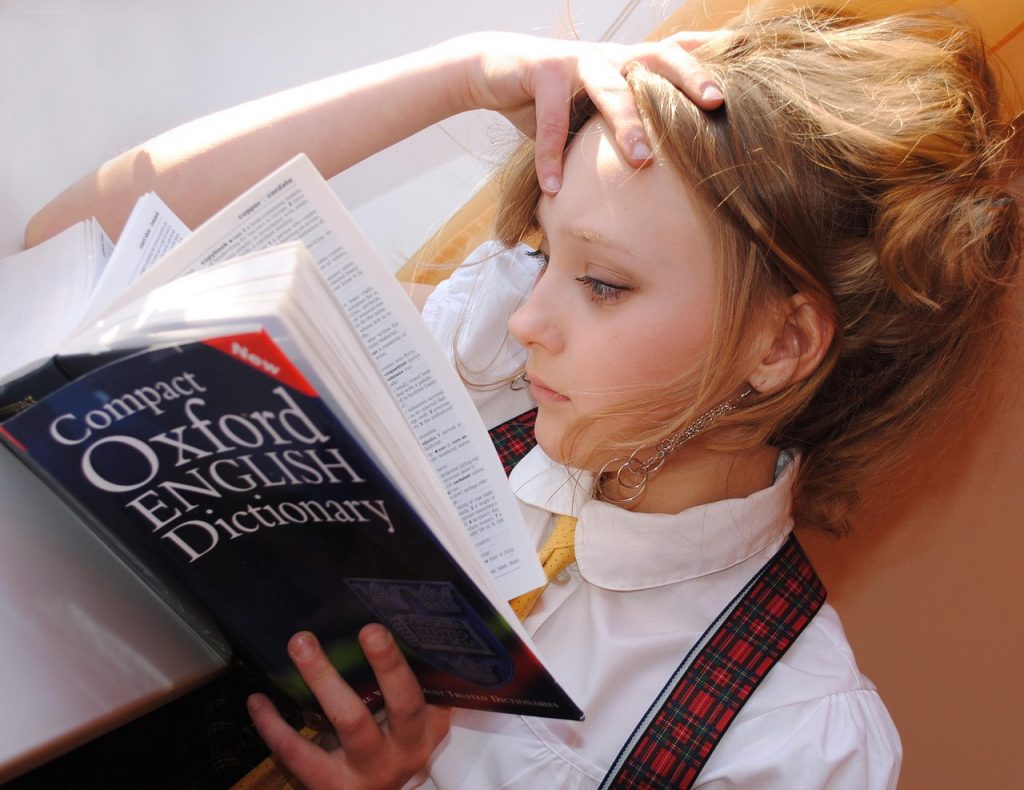
So, the latest UK budget no longer talks about reviving grammar schools or rolling out new academies. Instead, the focus has shifted to funding school repairs and rebuilding. Labour has increased spending, but only by a very modest 1.6% real-terms rise per pupil—a tiny amount when compared with vast sums directed toward war and weapons. Large investments are being channelled into special educational needs (SEND), which is badly needed, but it means that mainstream schools are seeing relatively little benefit.

Personally—and speaking as a teacher—I remain in favour of a selective secondary education system, provided that it has safeguards. Late developers should be able to transfer schools, and children from disadvantaged areas must have genuine access to these opportunities. Without such mechanisms, selection only entrenches privilege.

There are, however, two issues that I find absurd about how Britain continues to “reform” its education system. First, there is still no sign of a politician with a passionate, forward-looking vision for schooling that genuinely prepares young people for the unstoppable forces of technology and globalisation. Such a vision might involve dismantling the outdated timetable of narrow subject blocks, and instead encouraging flexible, interdisciplinary learning. Secondly, the entire system has been treated for decades as a political football, demoralising teachers and disrupting the lives of millions of children.

As usual, the Conservative Party blames Labour for whatever blocks their proposals, while conveniently forgetting that it was the Conservatives themselves who abolished grammar schools and introduced comprehensive education in the first place.

Yet the politicisation of education is only the tip of the iceberg. The deeper problem is that nearly all politicians’ children attend private schools, misleadingly known as “public schools.” I hate to sound cynical, but perhaps this issue is ignored because:
a) the label “public school” disguises their exclusivity, and
b) so many of the country’s most successful journalists also attended them, and are thus either blind to the inequity or complicit in maintaining it.

Even now, the majority of Oxbridge students come from private schools, and they go on to fill senior positions in politics (David Cameron, Theresa May, Tony Blair), the civil service, journalism, law, medicine, diplomacy, and business. For as long as this pipeline exists, why would politicians truly care about the state system?

Nowhere else in Europe is the link between private schooling and elite opportunity so entrenched. Education in the UK remains less about nurturing knowledge, skills, or culture, and more about handing out socially constructed keys to financial security.

A quick comparison with other European countries—where politicians’ children generally attend state schools—confirms the point.

Marx was right: capitalism sustains itself by maintaining an alienated underclass. The British education system is one of the most efficient tools for ensuring exactly that.

The mirror we all hold

“For now we see only a reflection as in a mirror; then we shall see face to face. Now I know in part; then I shall know fully, even as I am fully known.”
— 1 Corinthians 13:12

 In the Bible’s finest chapter on love, we find the core of what all human beings seek: to know the truth and to be loved unconditionally. Some are forced to abandon the search by war, famine, or disaster. Others numb it with money, power, routine, or religion. But painters, composers, writers, and prisoners ache until the search is done. Life may be a poor player strutting its hour upon the stage, yet it remains a miraculous gift. In my own search, this is what I have learned:

Our reality is socially constructed. It is not simply out there, an objective truth. It is shaped through interaction, language, and shared meaning. What we take as natural or real is the result of human processes. We create culture, institutions, and practices until they appear objective, unquestionable. Society is a human product, and humans are also a product of society.

So, God is not dead; she was never alive. Human beings are distinguished by language, and only with language could we invent the search for truth and love and confront our fear of death. We created narratives to explain, console, and control — each shaped by its ethnicity. When those narratives masquerade as religion, they breed arrogance and division, and evil flourishes in the shadows they cast.

In postmodern times, these grand stories have been dismantled, leaving behind fragments of wisdom, still priceless, still relevant. With their collapse comes the dissolution of absolute truth, the perfect mirror. We are left with fractured mirrors that blur and distort. We will never see face to face. We will never fully know.

Yet one certainty remains: we are constellations of atoms, stardust reassembled by chance and time, hurtling around our sun on a rock at 67,000 mph. DNA coils like ancient runes in every cell, issuing silent instructions: become, live, persist. From this choreography comes breath, thought, memory: a mother’s laughter, longing for distant places, a lover’s hand in the dark. We invent gods and heroes, build cathedrals and poems, grieve, and love. All this from fragile molecules wrapped in skin. Just chemistry. An echo of evolution. And yet: is it not a miracle that matter dreams at all?

As animals without God, we are capable of both the sublime and the grotesque, like a spider whose web can dazzle, yet devour. Both poles dwell in every heart. When misaligned in childhood, they consume more than they weave. Our destruction harms others as much as ourselves. Only when such misalignment is brought into the light, described and objectified, can disaster be averted. There is no cure, but it can be managed.

And yes, we need others. The fool thinks he can do it alone, with drugs or double lives. But we are social creatures, destined to create and to destroy together. We are the same story, written in different ink, linked like islands beneath the ocean. We need one another to hold up the mirrors in which we might glimpse truth — and love.

Love is the fiction we live and die for. Our need for sex and closeness becomes sonnet and story, until the invention feels more real than the words that birthed it. Yet in that fiction, light is found. And only in that light do the mirrors reflect enough to end our search.

The arts are our vehicle for this search. Education is archaic. It is preserved that way by an oligarchy masquerading as democracy to secure the success of its offspring. Were curricula ever to be revised, the arts must not be replaced by AI or science, but contextualised by them. Only then might humanity move toward security and enlightenment, instead of decline and crime.

I’d be very interested in your comments.

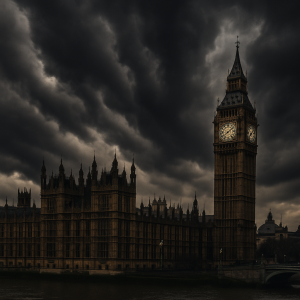
Beyond Schadenfreude: Britain After the Wind

Past: How We Talked Ourselves Into a Corner

We never really argued Europe on first principles—peace, prosperity, human rights, freedom of movement, shared standards. We argued on slogans. We outsourced the national imagination to tabloids and demagogues, and then acted surprised when magical thinking produced real-world bills. By the time the dust settled, “sovereignty” had become a vibe, not a plan.


Present: The Pragmatism Trap

Today’s politics feels relentlessly utilitarian: manage the spreadsheet, massage the headline, survive the next 24-hour cycle. Vision is treated as a risk factor. Meanwhile, the structural problems keep stacking up:

  • Debt at 60-year highs. Public sector net debt sits around 96% of GDP, a level last seen in the early 1960s.

  • A health service running hot. NHS elective waiting lists hover at 7.36 million despite record treatment volumes.

  • Inflation cooled, but prices didn’t. CPI is down to 3.8% (from an 11.1% peak in 2022), but households are still living with the permanent shift in costs.

  • Housing approvals at record lows. The pipeline is shrinking, even as the government talks up 1.5 million new homes.

  • The politics of optics. “Small boats” dominate the agenda, while coherent policies on growth, migration and industry are sacrificed to tabloid storms.

This is what happens when governments treat governing like crisis PR: you chase the loudest gust of wind. The result is performative toughness—hotel bans, punitive rhetoric—while the fundamentals (growth, productivity, health, housing, skills) remain under-powered.


Future: A Grown-Up Programme for Renewal

We don’t need new messiahs; we need competent, credentialed reformers with an ethic. A country can’t live forever on services, inflated rates and an isolationist shrug.

1. Industrial base fit for AI.
Ten-year strategy on AI, clean energy, advanced materials, with support for both “frontier” research and everyday adoption by small firms.

2. Education and skills as national infrastructure.
Support teacher retention, technical education pipelines, lifelong learning accounts, apprenticeships with genuine ladders into growth clusters.

3. Health and care joined up.
Integrate NHS and social-care budgets, expand surgical hubs, measure success by reduced emergency admissions.

4. Housing built where people need it.
Make the 1.5m homes target binding, with planning reform and public-interest land value capture.

5. Europe, soberly.
Step back in functionally: science programmes, youth mobility, security cooperation, sector agreements—trust rebuilt by substance, not symbols.

6. Migration with adult supervision.
Break smuggling, speed up asylum decisions, create lawful routes, stop governing by hotel headlines.


Closing

Pragmatism is a virtue only when it’s anchored in principle. Otherwise, it’s drift. Britain needs leaders who can hold a compass in high wind—and citizens ready to reward them for it.