Social Media Bans for Under 16s

Why banning social media for under-16s may feel right — but fails to address the real issue

There is a growing political appetite to ban social media for under-16s. Governments in countries such as Australia and Indonesia have already moved in this direction, driven by rising concern about anxiety, depression, and the psychological effects of digital life.

The instinct is understandable. But it may also be wrong.

The comfort of the ban

A ban is politically attractive because it is clear, decisive and easy to communicate. It signals protection. It tells a worried public that something is being done.

But it also avoids a harder question.

Why has social media become so central to childhood in the first place?

Policy without evidence

The Cambridge psychologist Sander van der Linden has been unusually blunt. There is, he argues, “zero empirical evidence” that banning social media for teenagers improves outcomes.

His warning is not ideological but methodological:

“Blindly instituting wholesale bans for teens takes the ‘evidence’ out of evidence-based policy.”

This matters. Because once policy is driven primarily by anxiety, it becomes vulnerable to simplification.

And simplification is exactly what this issue does not need.

The variability problem

Social media does not affect all children in the same way.

For some, it amplifies vulnerability: comparison, exclusion, anxiety.
For others, it provides connection, identity and support. As well as of course access to information for school work.

The outcome depends on:

    • personality
    • patterns of use
    • existing mental health
    • social environment

A blanket ban assumes uniform harm where there is, in reality, radical variation.

The misdiagnosis

More fundamentally, a ban risks targeting the wrong thing.

The problem is not simply that children use social media. It is that social media have been designed to capture attention:

    • infinite scroll
    • algorithmic reinforcement
    • intermittent rewards

These are not neutral features. They are behavioural systems.

Yet instead of regulating the environment, we regulate the child.

We restrict the user because we do not confront the system.

The illusion of control

Even on practical grounds, bans are fragile.

    • Teenagers will bypass them
    • Peer groups will remain online
    • The demand for connection will persist
    • Evidence shows that the dangers are greater once hidden underground

The behaviour does not disappear. It relocates. More importantly, a ban does not teach navigation. It postpones exposure.

From protection to preparation

Van der Linden’s alternative is not permissiveness, but preparation:

    • early digital literacy
    • gradual exposure
    • critical thinking
    • resilience

In short:

Not protection through restriction, but protection through competence.

The question beneath the question

But even this may not be the deepest layer because the focus on social media obscures a more uncomfortable possibility.

Over recent decades, childhood has changed:

    • less independent movement
    • less unsupervised play
    • more adult control
    • more structured time

Children are safer, and yet less free.

We did not simply give children smartphones.
We removed much of the world they would otherwise have enjoyed.

Social media did not replace childhood.
In some respects, it stepped into a space that had already been narrowed.

Conclusion

The case for concern about social media is strong.
The case for banning it is not.

As Sander van der Linden argues, policy should be guided by evidence, not urgency or political posturing. At present, the evidence for bans is thin, while the complexity of the problem is substantial.

If we want children to spend less time online, we will have to do something more difficult than passing laws.

We will have to ask what kind of childhood we are willing to allow.

“Of all tyrannies, a tyranny sincerely exercised for the good of its victims may be the most oppressive.”              – C.S. Lewis

The Myth of Powerlessness

What one person cannot do alone — and what millions can still do together.
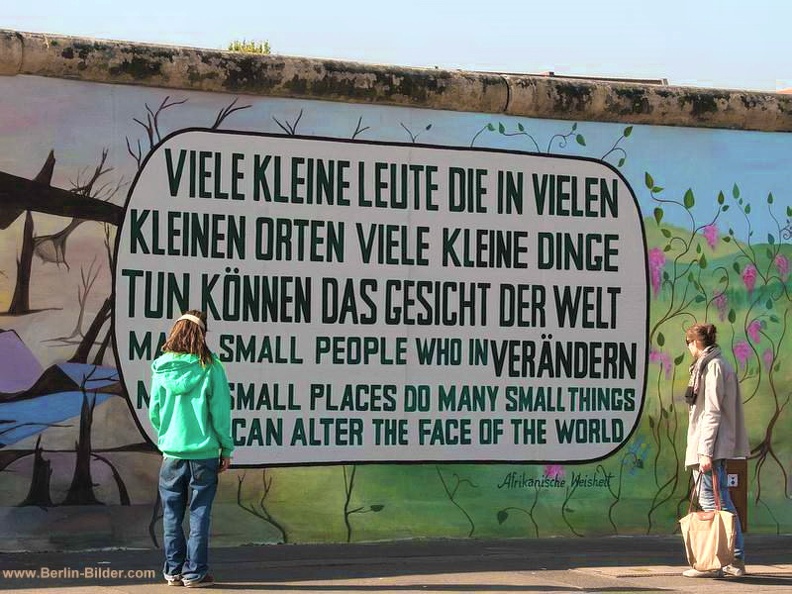
In a time of escalating global conflict and war, many people are asking the same question: what can one individual actually do?

Almost everyone I speak to says the same thing. On trains. In cafés. On the street. Among friends.

“Nothing.”

What can I do? I am one person. One voter. One consumer. One voice. The machine is too big. The war is too far away. The system is too entrenched.

It sounds like realism. But it is something closer to resignation.

At the time of writing, this is not an abstract question. The United States and Israel are engaged in a widening military campaign across Iran and the region, with consequences already extending into Lebanon and beyond. Civilian infrastructure has been hit. Escalation remains a real possibility. The language of expansion and power is no longer confined to the margins.

And yet, in the face of all this, the most common response remains the same: there is nothing I can do.

No one person can stop a war alone. That is true. But it does not follow that one person has nothing to do. It only means that conscience must become collective before it becomes consequential.

Every system of violence depends not only on leaders, generals, and ideologues, but on millions of smaller permissions: purchases, habits, silences, career calculations, and the daily decision to do nothing because doing something feels futile. That is where power really sits.

We do not have to look far, in my adotped country, to see both what passive compliance can enable and what collective refusal can undo.

Where pressure comes from

We tend to imagine power as something distant: governments, armies, corporations. And of course, it is. But it is also embedded in the ordinary flows that sustain those systems: money, attention, legitimacy, cooperation.

Remove enough of those, and even large structures begin to strain.

As Charles Eisenstein has argued, modern systems are often more fragile than they appear. Confidence depends on participation. Withdraw participation at scale, and the system feels it.

The point is not that one person can bring about collapse. The point is that systems depend on millions of people continuing to cooperate. Which means that non-cooperation matters too.

Not expression, but leverage

Much of what passes for protest today is expressive. It allows us to signal disapproval, to feel aligned, to release moral tension. But expression is not the same as pressure.

Pressure is slower, less visible, and more demanding. It involves changing behaviour, not just declaring opinion. It involves cost.

If anything is to change, the question is not what we feel, but what we are prepared to do differently.

What can actually be done

None of what follows is dramatic. That is precisely the point. These are actions available to ordinary people, within the law, that become powerful only when they are repeated, shared, and sustained.

Speak clearly

Not “this is terrible.” Say what you oppose, what you want changed, and who has the power to act. Silence is easy to ignore. Clarity is not.

Write, then write again

One message can be dismissed. Patterns cannot. Ask for a position, not a platitude. Follow up.

Use money deliberately

Reconsider where you bank. Review what your investments support. Cancel subscriptions tied to companies you wish to avoid. Move spending where you can. Systems built on constant inflow notice outflow.

Recently, after 20 years of brand loyalty, I shut down my Apple eco-system. I now use European-based Proton Mail, Calendar and Drive and I write using Linux Mint and open source software. I’ve discovered that I am not alone.

Boycott with focus

Vague refusal achieves little. Targeted, visible refusal accumulates. Choose specific companies or sectors. Be consistent. Make your reasons public.

Pressure the institutions around you

Your university, your workplace, your church, your professional body. Ask what they fund, who they partner with, what position they take.

Institutions prefer neutrality. Pressure forces articulation.

Organise—and keep going

Movements rarely begin large. They begin with a handful of people who decide to act together and to continue acting.

Continuity matters more than size.

Show up

Demonstrations are not sufficient, but they are not meaningless. Presence, visibility, repetition—these change the atmosphere in which decisions are made.

Support truth and relief

Support serious journalism, legal work and humanitarian organisations. Wars continue more easily when they are obscured.

Turn agreement into action

Agreement has no effect until it is organised. Exchange names. Set a date. Do one thing. Repeat.

What this requires

None of this is easy.

It requires persistence rather than intensity. Discipline rather than outrage. Coordination rather than isolation.

It also requires something else: the refusal to adopt the logic of the thing one opposes.

If protest becomes only anger, only dehumanisation, only the search for enemies, it begins to mirror the structure it resists. The aim is not to reverse roles within the same system, but to alter the system itself.

It is easier to argue about geopolitics than to examine the small ways in which we continue to cooperate with it.

That is slower work. But it is more durable.

Conclusion

No one person can stop a war.

But wars do not continue by themselves. They continue because millions of ordinary people, in thousands of small ways, continue to cooperate with the systems that sustain them.

Withdraw enough of that cooperation — financially, politically, socially, publicly — and pressure begins to build.

The question is not whether you can do everything.

It is whether you are willing to do something.

And whether enough of us are willing to do it together.

“The sad truth is that most evil is done by people who never make up their minds to be either good or evil.”
Hannah Arendt

Saved, Not Straight

For a time in my early thirties, I believed I had been changed. From the inside out. Born again. A new beginning and fresh start.

I had undergone what, in the language of the Christian evangelical world, could only be called a genuine conversion. It did not feel theatrical or socially induced. It felt seismic. My life changed in a moment. Shame receded. Purpose arrived. The scattered pieces of my identity seemed, at last, to lock into place. My life mattered and I had a destiny.

I re-organised my life accordingly. I took the Bible seriously and literally. I reordered my habits, my friendships, my ambitions. At one point I sold almost everything and moved countries to help start a church. None of this was half-hearted. I was, by temperament, never capable of half-belief.

And for a while — and this is the part I misunderstood — it worked.

The chaos that had previously marked my inner life settled into a kind of disciplined calm. The evangelical framework gave me structure, language, community and a powerful moral narrative in which to locate myself. I was no longer drifting. I knew who I was supposed to be. Most importantly, Jesus had healed me of my homosexuality.

Looking back now, with the cooler eye of age and a good deal more psychological literacy, I can see that what changed most dramatically was not my sexuality but my behaviour, my identity story, and the level of internal containment I was able to sustain.

Yet at that time, it did not feel like containment. It felt like healing.

This distinction between what feels like transformation and what actually is, sits at the heart of many sincere but ultimately fragile “healing” narratives.

Human behaviour is extraordinarily plastic under conditions of high meaning and strong community reinforcement. A sufficiently immersive belief system can re-organise daily life with impressive speed. It can quieten compulsions, redirect attention and produce periods of genuine stability. I experienced all of that. Many others have too.

What it did not do, what it could not do, was re-write the underlying structure of my sexual orientation.

That structure had been there long before my conversion, and it remained long after the emotional intensity of that period began, slowly and almost imperceptibly at first, to cool.

This is the point at which some readers, particularly those still inside strongly theological frameworks, may feel the ground shifting uncomfortably beneath their feet. Because it requires holding two truths at once. And fundamentlist Christianity cannot do that.

The first is that the conversion experience can be entirely sincere. Mine was. I was not pretending. I was not cynically managing appearances as I felt God supernaturally call me to the fro of the meeting to repent. I believed what I believed with the full force of my personality.

The second is that sincerity, however intense, does not grant the human nervous system unlimited plasticity. There are layers of the self that respond readily to new narratives, new communities, engaging worship music, charismatic preaching, new disciplines. And there are layers that are markedly more stubborn.

Sexual orientation appears, for the vast majority of people, to belong to the latter category.

Over time, not suddenly, not dramatically, but with the slow persistence of something that had never actually left, the old patterns of attraction reasserted themselves. Not because I had secretly wished them to. Not because I lacked discipline. Not because I had prayed incorrectly or insufficiently. But because the earlier sense of “healing” had been, in important respects, a narrative laid over something more deeply wired.

None of this, I should say, requires contempt for religion. Religious conversion can do many things remarkably well. It can stabilise chaotic lives. It can interrupt destructive habits. It can support sobriety. It can give people a moral and communal framework strong enough to hold them together during extremely fragile periods.

It did some of those things for me.

But in my case, it did not and could not perform the more ambitious miracle that was quietly hoped for beneath the surface language of discipleship and obedience.

It did not make me straight.

Looking back now, the word narrative has acquired a deeper significance for me than it had at the time.

During those years of faith, the Christian story did not feel like a narrative at all. It felt like reality itself. God was not a concept but a presence; Jesus was not a historical figure interpreted through centuries of theology, but the living centre of the universe. Seated on the throne of God and ruling over both my life and the world. That conviction organised my moral life, my ambitions, my sense of purpose, even the geography of my life.

Today I see that experience differently.

What I once experienced as divine intervention I now understand as the extraordinary human capacity to live inside powerful linguistic and cultural frameworks. Human beings are storytelling animals. Through language we build moral worlds, sacred histories, and identities that feel as solid as the physical world around us. Religion is perhaps the most sophisticated expression of that capacity.

From my present perspective, the God I once believed had healed me now appears less as a supernatural agent and more as a compelling narrative structure — one created, transmitted, and sustained through communities of belief over many centuries. That does not mean the experience of faith is trivial or insincere. My own certainly was not. But it does mean that the transformative power I felt then came not from a divine rewiring of my biology, but from the immense psychological force of a story that I had come to inhabit completely.

And stories, however powerful, cannot re-engineer the deeper architecture of human sexuality.

With the perspective I now hold, I no longer believe there was ever any supernatural mechanism in play capable of doing so. Human sexuality, in all its stubborn biological embeddedness across species and cultures, does not appear to be the kind of system that yields to prayer, however fervent, or to theological conviction, however sincere.

What religion offered me was not rewiring but narrative — powerful, coherent, temporarily life-organising narrative.

And narrative can carry a person a very long way.

For some, perhaps, it carries them a lifetime. For others, particularly those of us whose temperaments strain toward a rather unforgiving internal consistency, the gap between story and structure eventually becomes too wide to ignore.

When that happens, the earlier sense of miraculous change often has to be reinterpreted, not as fraud, and not as self-deception in any crude sense, but as something more human and more psychologically intelligible: a period of intense behavioural reorganisation under the influence of an immensely compelling meaning system.

That may sound less dramatic than the language of healing.

But it is, I think, more accurate.

And accuracy, however sobering, has at least this advantage: it allows us to understand how thoroughly decent, educated and sincere people can believe that something fundamental has been remade, only to discover later that what changed was real but partial: powerful enough to re-organise behaviour, but not powerful enough to re-write the deeper biological architecture of desire.

If my own story illustrates anything, it is not that religious experience is fake or emotionally insignificant. My conversion was neither. It re-organised my life, gave me discipline, purpose and community, and for a time it steadied an inner world that had previously been chaotic.

But what it did not do was alter the deeper grammar of my sexuality.

What I once interpreted as divine intervention I now understand as the extraordinary psychological force of a narrative fully inhabited, a story powerful enough to guide behaviour, but not powerful enough to redesign the organism that was living inside it.

And that, I have come to think, is the truth behind many testimonies of healing.

Conversion can change the story we tell about ourselves.

It cannot rewrite the nature we never chose in the first place.

“The most powerful stories are not those we tell others, but those we tell ourselves about who we are.”
Daniel Kahneman


Bürgergeldempfänger als Deutschlands liebste Sündeböcke

Die kleinste Ausgabe des deutschen Sozialstaates erzeugt die lauteste politische Empörung.

Die deutsche Debatte über das Bürgergeld wird meist im Ton gereizter Empörung geführt. Zu viel Geld, zu wenig Druck, zu wenige Anreize, zu viel Nachsicht. Das Bild dahinter ist simpel: Der Staat verteilt Geld – und dann ist es weg.

Doch dieses Bild ist sowohl ökonomisch grob als auch eine politisch bequeme und polarisierende Ablenkung.

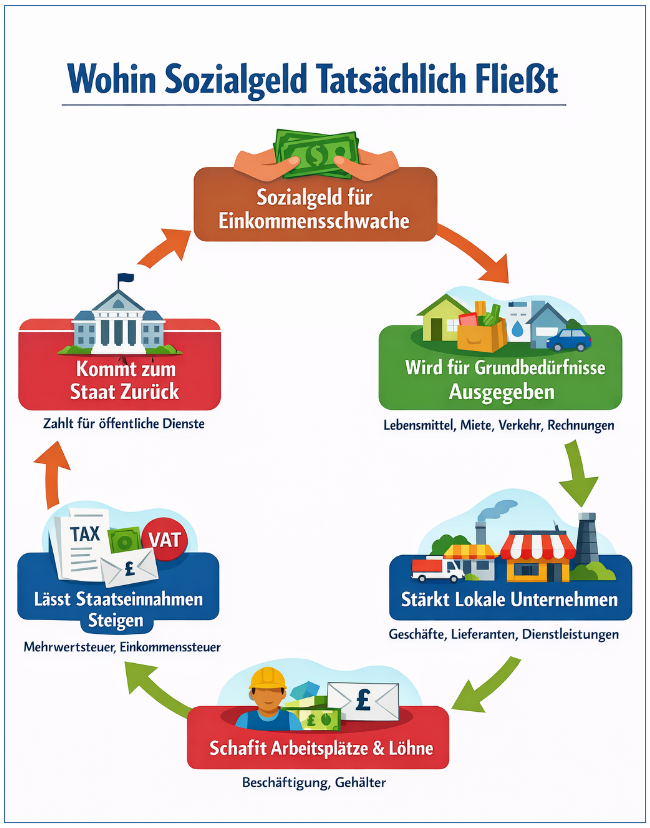
Geld, das an einkommensschwache Haushalte gezahlt wird, verschwindet nicht. Es zirkuliert. Ein Teil fließt sofort über die Mehrwertsteuer zurück zum Staat. Ein größerer Teil landet bei Supermärkten, Lieferanten, Vermietern, Dienstleistern – und damit wiederum in Löhnen, Gewinnen und Steuereinnahmen. Sobald man aufhört, Sozialleistungen so zu betrachten, als würden sie einfach in einem schwarzen Loch verschwinden, sieht die Rechnung plötzlich ganz anders aus.

Der unmittelbare Rückfluss über Steuern

Beginnen wir mit dem Offensichtlichen. In Deutschland zahlt der Endverbraucher die Mehrwertsteuer. Der reguläre Satz beträgt 19 Prozent; für viele Grundbedürfnisse gilt der ermäßigte Satz von 7 Prozent.

Wenn ein Haushalt mit niedrigem Einkommen sein Geld für Lebensmittel, Kleidung, Hygieneartikel, Verkehr oder andere Alltagsausgaben verwendet, fließt ein Teil dieses Geldes unmittelabar zurück in die öffentlichen Kassen. Bei einem Einkauf von einem Euro mit 7 Prozent Mehrwertsteuer stecken etwa 6,5 Cent Steuer im Endpreis. Bei 19 Prozent sind es rund 16 Cent.

Schon bevor man die weiteren wirtschaftlichen Effekte betrachtet, ist also klar: Die Vorstellung, Sozialtransfers seien reine Einbahnstraßenverluste, stimmt schlicht nicht.

Warum ärmere Haushalte mehr ausgeben

Der wichtigere Punkt kommt danach: Menschen mit geringem Einkommen geben Geld aus. Meistens müssen sie das auch.

Ökonomen beschreiben dieses Verhalten mit dem Begriff der marginalen Konsumneigung – also dem Anteil eines zusätzlichen Euro, der tatsächlich ausgegeben statt gespart wird. Der Befund aus zahlreichen Studien ist eindeutig: Haushalte unter finanziellem Druck geben einen größeren Teil zusätzlicher Einnahmen aus, während wohlhabendere Haushalte ihr überschüssiges Geld eher sparen oder steuerlich begünstigt investieren.

Eine Studie des Internationalen Währungsfonds zeigt beispielsweise, dass finanziell belastete Haushalte Transferzahlungen mit einer um mehr als 20 Prozent höheren Konsumneigung verwenden als Haushalte ohne solche Sorgen. Eine andere Analyse kommt zu dem Schluss, dass Transfers über mehrere Jahre hinweg gesamtwirtschaftliche Multiplikatoreffekte deutlich über eins erzeugen können.

In einfachen Worten: Ein ausgezahlter Euro kann mehr als einen Euro wirtschaftliche Aktivität erzeugen.

Die Zirkulation des Geldes

Genau deshalb ist die klassische konservative Kritik am Bürgergeld oft nur halb blind. Sie zählt die Bruttoausgaben – aber nicht die Zirkulation danach.

Der Empfänger kauft Lebensmittel. Der Supermarkt bezahlt Personal und Großhändler. Der Großhändler bezahlt Transport und Lager. Beschäftigte geben ihre Löhne aus. Unternehmen zahlen Mehrwertsteuer, Gewerbesteuer, Körperschaftsteuer und Sozialabgaben.

Kein seriöser Ökonom würde behaupten, dass jeder ausgezahlte Euro sich vollständig selbst finanziert. Aber ebenso wenig ist es ehrlich, so zu tun, als würde der Staat das Geld einfach verbrennen.

Marx und die „Reservearmee“

Es gibt noch einen tieferen gesellschaftlichen Punkt. Karl Marx’ alte Idee von der „industriellen Reservearmee“ hat bis heute eine gewisse Erklärungskraft. Kapitalismus stabilisiere sich, argumentierte Marx, unter anderem durch die Existenz einer Bevölkerung, die arbeitslos, unterbeschäftigt oder wirtschaftlich unsicher genug ist, um Druck auf diejenigen auszuüben, die Arbeit haben.

„Je größer der gesellschaftliche Reichtum … desto größer die industrielle Reservearmee.“
— Karl Marx, Das Kapital, Band I

Man muss kein Marxist sein, um die Relevanz dieses Gedankens zu erkennen. Arbeitsmärkte brauchen immer eine gewisse Zone der Verwundbarkeit: Menschen, die verfügbar sind; Menschen, die unsicher sind; Menschen, die daran erinnert werden, was passiert, wenn sie herausfallen.

Auch deshalb werden Debatten über soziale Mindeststandards so emotional geführt. Beim Bürgergeld geht es nie nur um Haushaltszahlen. Es geht auch darum, welches Maß an Unsicherheit eine Gesellschaft für akzeptabel – oder sogar nützlich – hält.

Die Zahlen des deutschen Sozialstaates

Und hier werden die deutschen Zahlen politisch aufschlussreich.

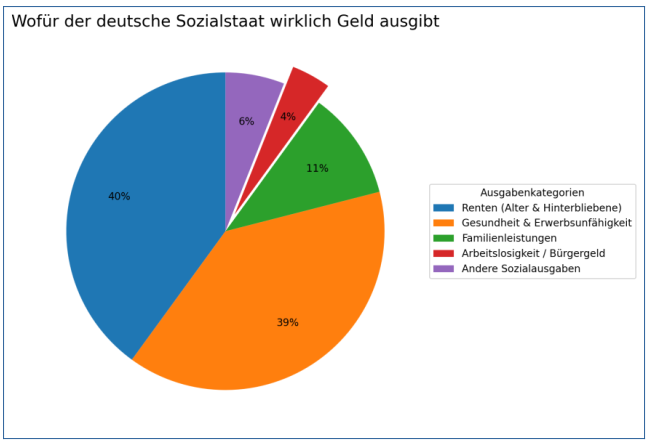
Laut Sozialbudget 2024 des Bundesministeriums für Arbeit und Soziales beliefen sich die gesamten Sozialausgaben Deutschlands auf rund 1,345 Billionen Euro. Davon entfielen etwa 58,2 Milliarden Euro auf das Bürgergeld – rund 4,3 Prozent der Gesamtausgaben.

Zum Vergleich: Allein für Alter und Hinterbliebene wurden 533 Milliarden Euro ausgegeben. Für Krankheit und Invalidität rund 523 Milliarden Euro.

„Die kleinste Scheibe des Sozialstaates erzeugt die lauteste politische Empörung.“

Wie auch immer man den Haushalt betrachtet – die Vorstellung, Bürgergeld sei das zentrale finanzielle Monster des deutschen Sozialstaates, ist schlicht absurd. Es ist sichtbar, ja. Politisch verwertbar, sicherlich. Aber es ist nicht die Hauptgeschichte.

Politische Obsession und reale Probleme

Und das ist nicht trivial. Politische Obsession kostet Zeit.

Zeit, die damit verbracht wird, über Bürgergeld zu moralisieren, fehlt bei der Auseinandersetzung mit den wirklich großen Herausforderungen der deutschen Wirtschaft: schwaches industrielles Wachstum, lähmende Bürokratie, schleppende Digitalisierung, überforderte Verwaltungen, unzureichende Qualifizierungssysteme, ein angespanntes Gesundheitssystem, steigende Rentenlasten und die fiskalischen Entscheidungen rund um Verteidigung und Staatsverschuldung.

Den Blick unverhältnismäßig stark auf die unterste Stufe der Einkommensleiter zu richten, ist keine nüchterne Realpolitik. Es ist eine politische Ersatzhandlung.

Die Lehre aus der Kurzarbeit

Deutschland selbst hat übrigens bereits gezeigt, wie die Logik solcher wirtschaftlichen Multiplikatoren funktionieren kann. Während der Pandemie setzte der Staat nicht allein auf moralische Appelle zur Eigenverantwortung, sondern nutzte Kurzarbeit, um Einkommen an Beschäftigung zu binden.

Auf dem Höhepunkt befanden sich fast sechs Millionen Menschen in Kurzarbeit. Studien des Instituts für Arbeitsmarkt- und Berufsforschung legen nahe, dass das Instrument dauerhaft Arbeitsplätze gesichert hat.

Die Lehre daraus ist einfach: Wenn der Staat Einkommen stabilisiert, stabilisiert er auch Nachfrage, Unternehmen und Beschäftigung.

Bürgergeld ist ein anderes Instrument. Aber das Prinzip ist ähnlich.

Einkommenssicherung ist oft billiger als gesellschaftlicher Absturz.

Ein ehrlicher Ausgangspunkt

Eine ehrlichere Debatte über Grundsicherung müsste deshalb mit einem einfachen Satz beginnen:

Dieses Geld verschwindet nicht.

Ein Teil fließt sofort über Steuern zurück. Ein größerer Teil hält Nachfrage in der realen Wirtschaft aufrecht. Und alles zusammen verhindert die weitaus höheren Kosten von Armut: schlechtere Gesundheit, geringere Beschäftigungsfähigkeit, soziale Demütigung, familiären Stress und langfristigen Vertrauensverlust in staatliche Institutionen.

Wenn Deutschland wirklich weniger Menschen im Bürgergeld haben möchte, lautet die Antwort nicht moralische Empörung.

Sie lautet: Wachstum, Kompetenz, Qualifizierung, funktionierende Verwaltung und ein Arbeitsmarkt, der Menschen tatsächlich wieder in stabile Beschäftigung aufnehmen kann.

Bis dahin sagt das höhnische Reden über diejenigen, die gezwungen sind, vom Minimum zu leben, vielleicht weniger über sie aus als über die Armut der Debatte selbst.

„Die Ideen von Ökonomen und politischen Philosophen, ob richtig oder falsch, sind mächtiger, als gemeinhin angenommen wird.“
— John Maynard Keynes