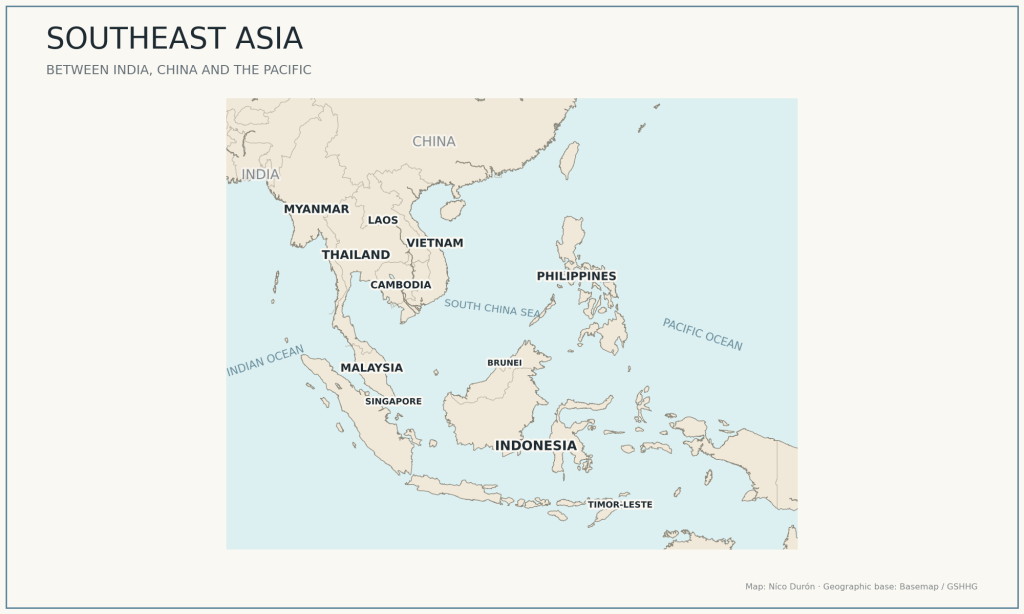
 Last week, I explained why my journey to Southeast Asia began with a chance meeting in a smoky bar in Bali.
Before we set out from Bangkok and begin making our way back to Indonesia, I’d like to give some background to the area of the fascinating area of the world we will be visiting.
When I ask my friends and family what comes to mind when they hear the words Southeast Asia, they usually reply with a familiar collection of images: tropical beaches with turquoise water, temples draped in orange robes, bustling night markets and steaming bowls of noodles, backpackers, elephants and Bali. Maybe also the Vietnam War.
All of those images contain a grain of truth, but I have recently discovered that none of them explains why Southeast Asia exists in the form we know today or why countries separated by only a few hundred kilometres can feel so profoundly different.
The first mistake we make is to think of Southeast Asia merely as a destination, when actually it is the most significant crossroads.
For more than two thousand years, merchants, pilgrims, armies, refugees and explorers have travelled through this region, carrying religions, languages, technologies, crops and ideas. Some arrived peacefully, while others arrived violently. But all left their mark.
The Strait That Changed the World
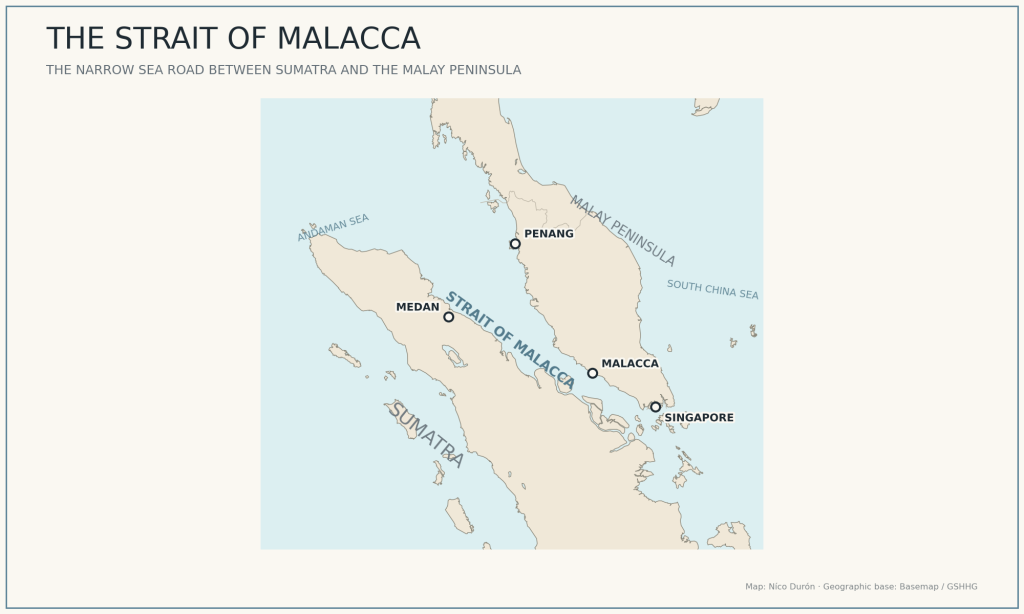
Imagine standing on a hill overlooking the Strait of Malacca, the narrow stretch of water separating the Malay Peninsula from the Indonesian island of Sumatra.
Today, enormous container ships glide through it carrying electronics, oil, cars, grain and almost every other product imaginable. Two thousand years ago, the view would have been different, yet strangely familiar. Instead of steel ships, wooden vessels with woven sails waited for favourable winds. Their cargoes included pepper, cinnamon, silk, porcelain, sandalwood, ivory and precious stones.
Indian merchants sailed east. Chinese merchants sailed south. Arab traders crossed the Indian Ocean. Later came Portuguese caravels, Dutch East India Company fleets and British steamships. So many nations passed through here. And whoever controlled these waters controlled one of the richest trading routes on Earth.
It is impossible to understand Southeast Asia without first understanding that simple geographical fact. The region was never isolated. It was connected, usually, but not always, by water.
Southeast Asia: Where Civilisations Meet
The consequences of that connection are still visible everywhere. The ancient temples of Cambodia look unmistakably Indian. Vietnam bears the deep imprint of China. Malaysia and Indonesia are predominantly Muslim. Thailand remains deeply Buddhist. Bali is overwhelmingly Hindu. If I were looking for evidence the geography determines religion, this would be the best place on earth to start.
Meanwhile, Singapore has become one of the most multicultural cities on Earth. European colonial buildings stand beside Chinese shophouses, Hindu temples, Buddhist monasteries, mosques and modern glass towers. Every layer tells another part of the same story.
Our own route will carry us through many of those layers.
We will begin in Thailand, travel through Laos, Cambodia and Vietnam, then turn south through Malaysia and Singapore before entering Indonesia. The distances between some of these countries are surprisingly small, but the cultural differences are huge.
Cross from Thailand into Laos and life appears to slow down. Continue into Vietnam and the atmosphere changes again. Enter Singapore and you may feel as though you have travelled into the future. Reach West Sumatra and the call to prayer echoes across rice terraces beneath volcanic mountains.
How can places so close together feel so different? That question lies at the heart of our journey.
Not Waiting to Be Discovered
My schooling in England convinces me that Europeans have often imagined Southeast Asia as peripheral to world history, as though the great events of civilisation happened elsewhere.
Nothing could be further from the truth. Long before many European kingdoms even existed in their present form, magnificent cities were flourishing here.
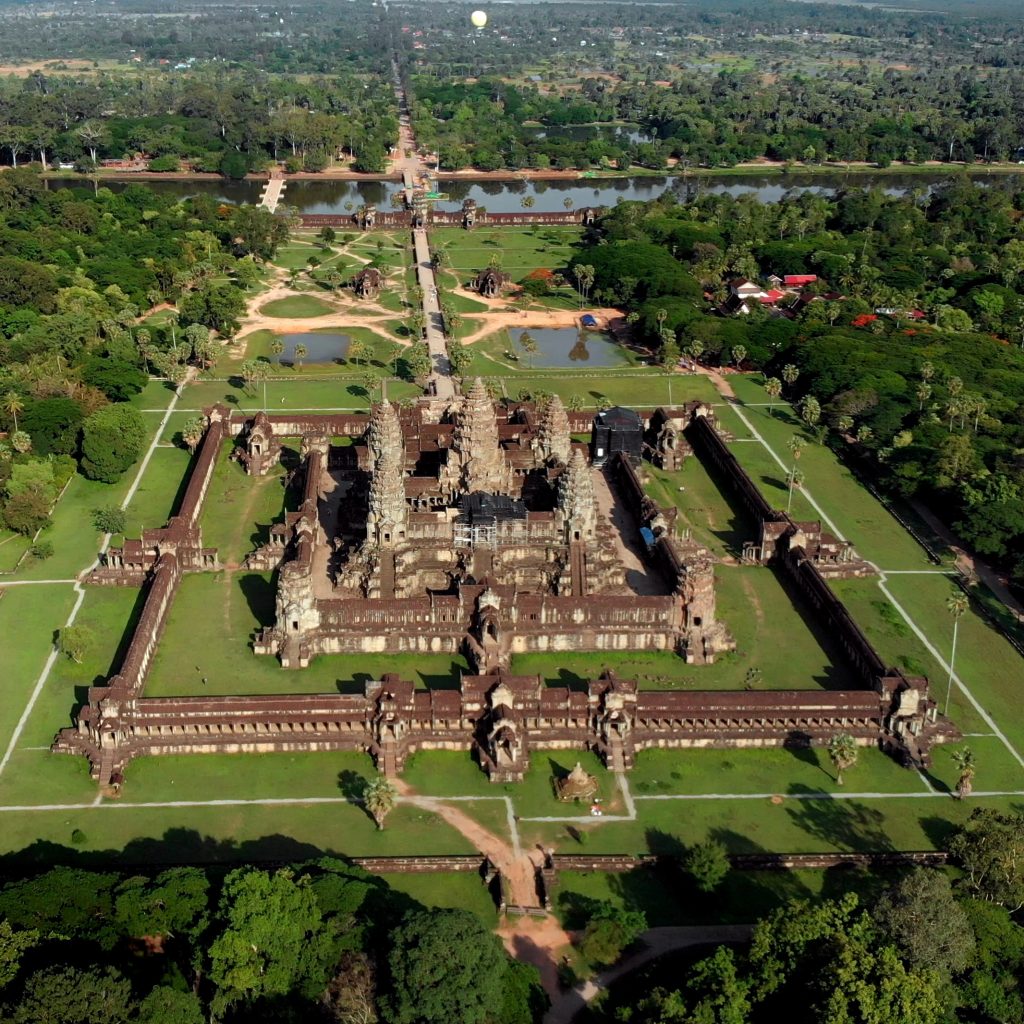
The Khmer Empire built Angkor, one of the greatest religious complexes ever created. The maritime empire of Srivijaya controlled trade across much of the region. Majapahit governed an island realm whose memory still influences modern Indonesia. These were not isolated societies waiting for Europeans to “discover” them. They were sophisticated civilisations trading with the wider world while much of medieval Europe remained politically fragmented.
Nor was influence simply imposed from outside. Southeast Asians borrowed, adapted and transformed what arrived. Indian religious ideas became something new at Angkor and Bali. Chinese culture profoundly influenced Vietnam, but Vietnam never simply became China. Islam travelled through trading networks and mingled with customs that were already centuries old. Even colonial rule produced different results in different countries. Thailand retained its independence, while its neighbours were governed by Britain, France and the Netherlands.
Southeast Asia remade what the world brought to it.
Travelling With Questions
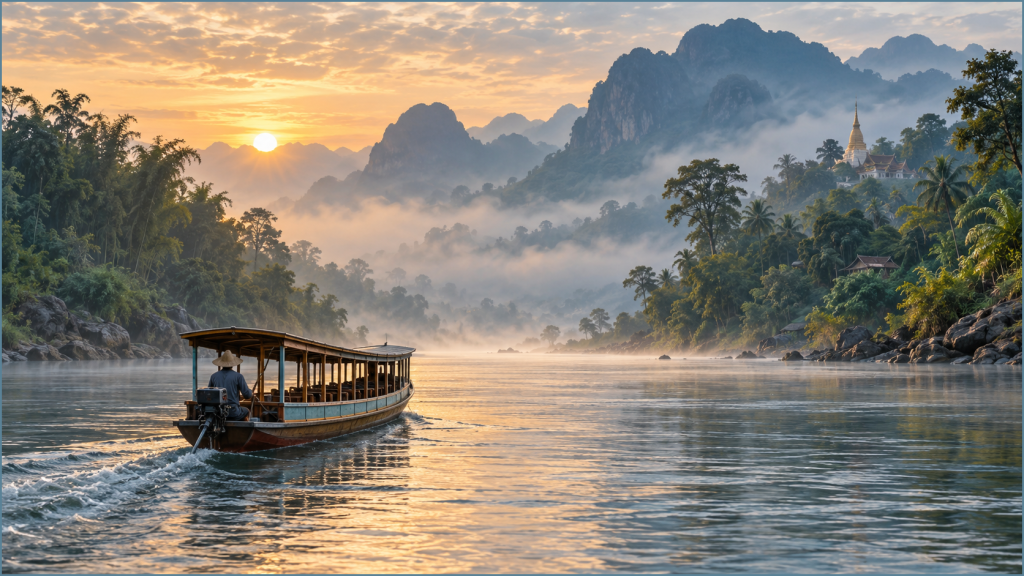
I have no intention of presenting myself as an expert on this enormous and complicated region. As I wrote last week, I am going with many questions.
Over the coming months, I shall try to answer some of those questions — sometimes through history, sometimes through the people we meet and sometimes simply by showing you what we see.
Our journey begins this week in Bangkok. But the most important story begins much earlier with moving continents, restless volcanoes, mighty rivers and winds that once carried wooden ships across the sea.
Before we meet the countries, we must first understand the remarkable stage upon which their histories were played.
“The only true voyage of discovery … would be not to visit strange lands but to possess other eyes.”
— Marcel Proust, The Captive