America First, America Finished? How Trump Is Shrinking a Superpower

Trump, Asia and the New World Order

When I was flying back and forth to Indonesia last year, something on the ground kept nagging at me more than the jet lag.

It wasn’t the traffic jams or the humidity. It was the cars.

Jakarta’s new car market is now a sea of logos many Europeans and Americans still barely recognise: BYD, Chery, Geely, Great Wall, Wuling. These aren’t curiosities anymore; they’re the default options on showroom floors and in middle-class driveways. China exported about 5.9 million vehicles in 2024, with Chinese brands now taking around 65% of their own domestic market and leading global export growth.

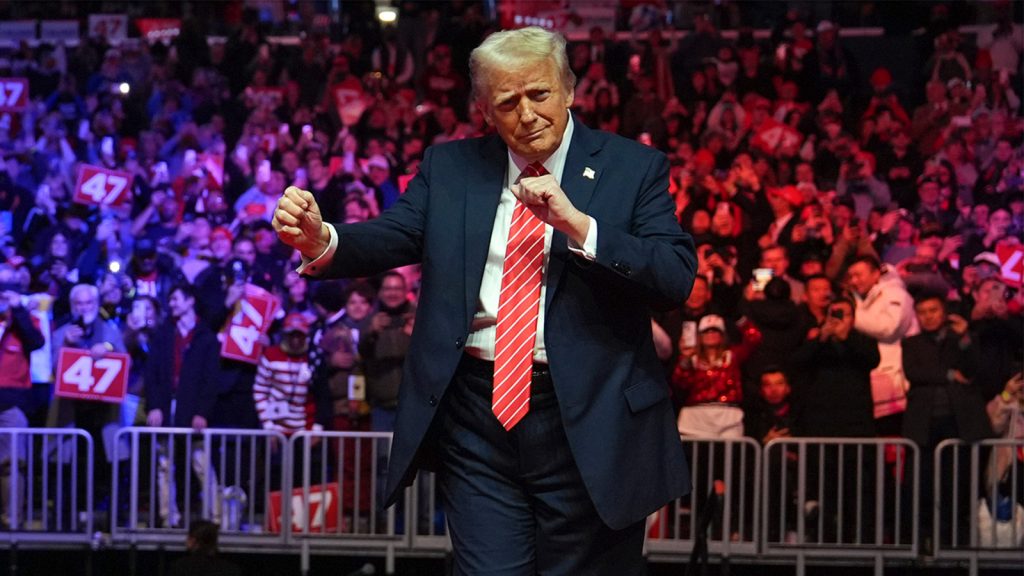
If you want to understand why Donald Trump’s isolationist “America First” project is actually accelerating America’s relative decline, start in a Jakarta car park, not in Washington.

Because while Trump shouts about greatness into a microphone, the centre of gravity of the real economy is sliding, quietly and empirically, towards Asia.

Asia’s Rise Is No Longer a Prediction — It’s a Measurement

Asia now accounts for around 49% of global GDP (PPP). North America and Europe combined have dropped to about 39%, down from 58% in 1980. The shift isn’t subtle; it’s structural.

China alone produces about 35% of global manufactured goods, more than the next nine countries combined. Its share of global exports has risen from 3.9% in 2000 to over 14% today, while the U.S. has fallen from 12% to under 9%.

This isn’t “cheating”. It’s performance.
And Asia is performing — relentlessly.

“America First” is being matched by “Asia Busy Working”.

Planes, Cars, Chips: The Quiet Transfer of Influence

In Southeast Asia, the consumer economy has already pivoted eastward. Chinese and Korean car brands have become aspirational. Japanese brands remain strong. American brands barely appear.

And in aviation, China’s COMAC is now producing the C919, a credible competitor to Boeing’s 737 — at exactly the moment Boeing faces delays, quality concerns and real reputational damage.

Asia is no longer assembling Western dreams.
It is building its own.

America First = America Alone = America Weaker

Trump’s worldview is dangerously simple:

    • America has been “ripped off”.
    • Trade is zero-sum.
    • Tariffs can restore greatness.
    • Cooperation is weakness.

But the real effects are the opposite:

    • Allies lose trust.
    • Asia builds alternatives.
    • Global supply chains simply route around the U.S.
    • Markets become unstable.
    • The very partners America needs are pushed away.

You do not protect leadership by insulting your allies.
You simply teach them how to live without you.

The Numbers: A Superpower Living Beyond Its Means

A snapshot of America today:

Debt: ~120% of GDP, on track to hit 134% by 2035.

Exports: falling relative to global share.

Education: PISA scores below OECD average in maths.

Health: life expectancy 2 years below other rich countries.

Credit ratings: downgraded due to political dysfunction.

None of this is solely Trump’s fault — but his policies accelerate every downward curve.

The Leadership Problem

The deeper question is moral and cultural:
How does a wealthy democracy choose a leader who is twice impeached, convicted on 34 felony counts, found liable for sexual abuse, repeatedly racist, proudly uninformed — and still treated as a serious statesman?

Even a young  YouTuber like Parkergetajob often articulates policy with more coherence than the President of the United States. That alone tells a story.

The decline of leadership is a decline of standards.
And a decline of standards is the beginning of national decay.

History’s Warning Labels

The fall of great powers follows familiar patterns:

    • Rome: internal corruption, political chaos
    • Ottomans: denial, nostalgia, refusal to modernise
    • Britain: moral exhaustion + economic overstretch

The common thread?
A preference for comforting myths over uncomfortable facts.

Trumpism is exactly that:
a mythology of greatness masking a reality of shrinking influence.

America’s Choice

America is still extraordinary — innovative, creative, wealthy. But greatness today requires cooperation, competence and credibility.

Trump offers none of these.
He offers slogans, ange, division and isolation.

And in a century defined by interconnected systems, a country that isolates itself does not become stronger.
It becomes smaller.

America won’t be destroyed by China or Europe or migrants.
It will be destroyed by the comforting lie that it doesn’t need the rest of the world.


Why Populists Thrive in a Connected World

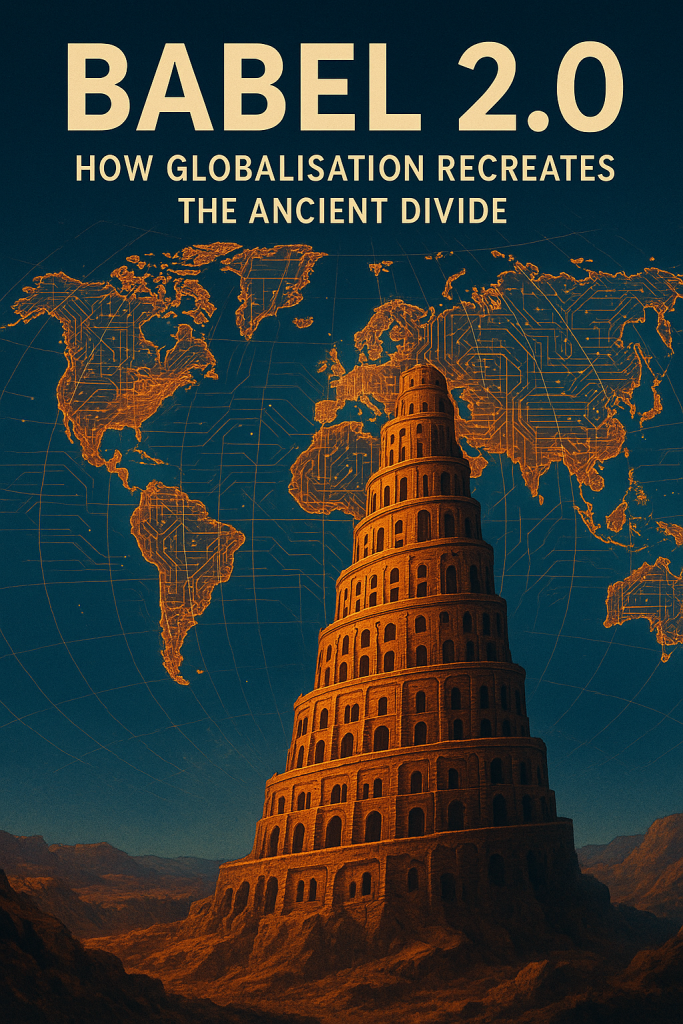
Why Has Globalisation Increased Division Instead of Unity?

Globalisation should have been our great humanising force. For the first time in history, large numbers of people can travel freely, study abroad, work internationally, and encounter cultures that would once have remained distant and unknown. We have access to films, music, literature, foods, and languages from every continent. On paper, this should have produced an age of empathy. A century in which the old barriers of race, nationality, and religion dissolved into shared humanity.

Yet the opposite has happened. As the world has opened up, political identity has hardened. Populist nationalism has surged: Donald Trump in the United States, Viktor Orbán in Hungary, Vladimir Putin in Russia, and similar strongman figures elsewhere. Racism, religious extremism, conspiracy thinking, and tribal rhetoric are resurgent. The more connected the world becomes, the more threatened people seem to feel.

This contradiction is not new. It is the old story of the Tower of Babel. Human beings build upward toward unity, creativity, and common purpose—yet something in us fractures, resists, and disperses. Even if we don’t read that story religiously, it is psychologically precise. The closer we come to real integration, the more fear arises: fear of loss of identity, loss of control, loss of status.

Globalisation has consistently been experienced not as shared enrichment but as competition. The immigrant is framed not as a neighbour, but as a rival. Cultural diversity is discussed not as dialogue, but as dilution. Political rhetoric encourages the idea that “our” way of life is being erased. The result is defensive nationalism and, increasingly, violence.

This is not inevitable. The problem is not globalisation itself, but the absence of global solidarity to accompany global interdependence. We have integrated our economies, but not our ethics. We have connected our markets, but not our imaginations.

So the question is: How do we reverse the tide? How do we turn globalisation into a force for peace, dignity, and cooperation rather than division and resentment?

Here are three foundations:

1. Global Education that Teaches Perspective, Not Propaganda
International exchange programs cannot simply be tourism or language practice; they must cultivate the ability to see oneself from the outside. To understand how one’s culture appears to others, how history shapes identity, and how dignity must be mutual. Education that only reinforces national narratives will always produce suspicion, not solidarity.

2. Freedom of the Press, Protected by Law, Not Politics
Real democracy depends on the ability to critique power. When the press becomes the instrument of governments, oligarchs, or corporations, societies fracture along invented fears. The crisis at the BBC this week is not a local scandal—it is a warning. If journalism cannot report freely, citizens cannot think freely. And if citizens cannot think freely, they cannot live together freely.

3. Cross-Border Economic Cooperation That Shares, Not Extracts
The problem is not diversity—it is inequality. When globalisation enriches a few and impoverishes many, resentment is inevitable. But when globalisation supports fair wages, sustainable industry, ecological responsibility, and shared growth, it strengthens stability rather than fear.

In short: global interconnectedness must be matched with global empathy.

We already live in one shared world. The question is whether we will learn to behave as if that is true.

Unity is not naïve. It is the only realistic future we have.

“We may have different religions, different languages, different colored skin, but we all belong to one human race.”

–Kofi Annan

The Blueberry Paradox: Why We Keep Destroying the Systems That Could Save Us

On my last day in Spain, I sat at a small café, watching three men take down decorations from the town’s recent festival. The bunting had hung across the square for days, colouring the white-washed walls with celebration. Now the tourists had gone home, and these men — quiet, anonymous, methodical — were returning the square to its ordinary face.

Their work is unremarkable. No one applauds. Yet without people like them, the whole “beautiful tourist city” collapses.
Without them, the photos don’t look charming.
Without them, the streets feel neglected.
Without them, the illusion breaks.

I found myself thinking about fishermen at dawn, hotel cleaners before breakfast, bin collectors at 4am. The quiet labour that keeps the world turning — labour that rarely receives dignity, respect, or fair pay.

Then I looked at my arm.
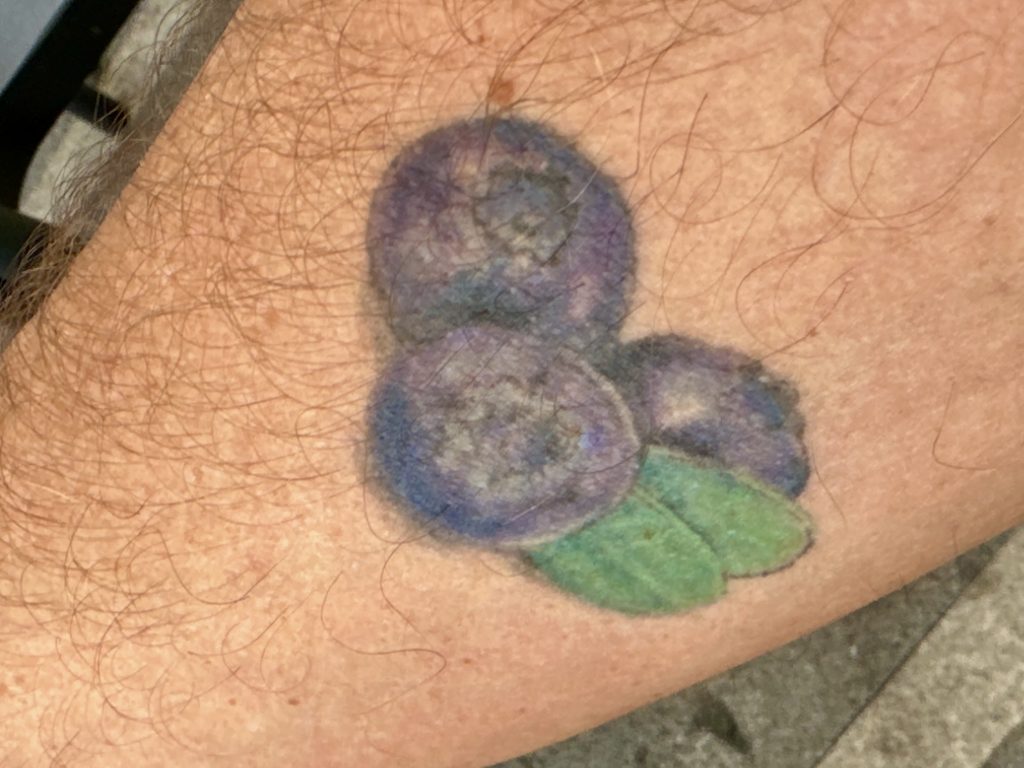
At the blueberries.

Yes — I have blueberries tattooed on my forearm. And no, it’s not whimsical. Or perhaps it is, but in the way truth sometimes hides inside whimsy.

The blueberries remind me that I cannot enjoy anything alone.
Not even my breakfast.

To eat a blueberry, I depend on soil, weather, farmers, packers, transport workers, supermarket staff, the climate not collapsing this particular year. My pleasure is communal, whether I acknowledge it or not.

Upside down, from a distance, the blueberries form a heart-shape. I didn’t plan that. But perhaps the body speaks before the mind is ready to believe.

The tattoo is a reminder:
You are held. Your life is made by many lives. You are not independent.

And so here’s the question that came to me in that Spanish square:

If we know we are interdependent, why do we build societies that pretend we aren’t?

Why do we reward the illusion of the “self-made individual” while the world is built by the unseen hands of others?

Why does the fisherman earn less than the financier?
The cleaner less than the consultant?
The bin collector less than the politician?

It is not rational.
It is not moral.
It is not even economically coherent.

It is, however, familiar.

And this — whether people like to admit it or not — is where Marx enters the conversation.

Marx’s Point Was Never “Everyone Should Be the Same”

Marx’s central claim was beautifully simple:
Human labour creates value.
So the people who create value should benefit from it.

That’s it.
That’s the hinge.

Marx wasn’t calling for laziness, or enforced sameness, or the death of creativity. He was pointing out that societies become obscene when those who create the conditions for life (food, sanitation, infrastructure, care) are treated as disposable.

He believed in dignity through shared labour.
In contribution as meaning.
In justice as the redistribution of the wealth that labour creates.

Which is why, though he rejected religion, Marx comes surprisingly close to Jesus.

Jesus also preached the reversal of hierarchy:

“The last shall be first, and the first last.”

Not metaphorically — economically, socially, relationally.

Both men looked at society and said:

This is upside down.
We can live differently.

Both pointed to community over competition, relationship over possession, need over greed, dignity over dominance.

And yet —
we have not built the world either of them imagined.

Not once.
Not anywhere.
Not for long.

So the question is no longer Was Marx right?
Or Was Jesus right?

The question is:

What stops us from building the just society both of them saw so clearly?

The Answer Is Not Economic. It’s Psychological.

We call it capitalism vs. communism
but the real struggle is fear vs. trust.

We hoard because we are afraid there won’t be enough.
We compete because we are afraid of being overlooked, replaced, forgotten.
We dominate because we are afraid of being powerless.
We cling to hierarchy because we are afraid of being ordinary.

Fear is the water we swim in.
Fear is the undecorated square after the festival is taken down.
Fear is the silence in the early morning before the day begins.

Marx underestimated fear.
Jesus named it, but was killed for it.

And every system we have built has collapsed for the same reason:

We would prefer to be safe than to be equal.

The Failure Was Never Marx’s. It Was Ours.

We say “communism failed” as if ideology collapsed of its own weight.
But ideas don’t fail.
Systems don’t fail.

People fail.

We fail because we want justice until justice requires something of us.
We want equality until equality asks for our privilege.
We want community until community interrupts our autonomy.

We want the kingdom of God
without the cross.

We want Marx’s dignity of labour
without surrendering status.

So we keep building worlds in which:

  • the blueberry appears magically on the table

  • the labourer remains invisible

  • and we pretend we did this alone.

The Blueberries Again

I look at my arm.
The tattoo.
The accidental heart.

A reminder that interdependence isn’t an ideal —
it’s already true.

We just live as if it isn’t.

The question is not whether a just society is possible.
We already rely on one.
Every day.
Every meal.
Every building.
Every service.
Every breath of shared infrastructure.

The question is simply:

When will we live as though we know it?

And perhaps the first step toward a better society
is simply learning to say:

Thank you.
To the fisherman.
To the street worker.
To the invisible hands.
To the ones who keep the world turning
so that the rest of us can pretend we did it ourselves.

Room 911: A Tale of Two Holidays

This is a short story I wrote when I was 17 on holiday in Spain. I hope you enjoy it. 

Room 911

A Tale of Two Holidays

‘Cabin crew, doors to manual.’

‘At last,’ sighed Paul as he unclipped his seatbelt.

The two-and-a-half-hour flight to Malaga had been an endurance test: three cramped seats in the back row next to the toilets; a turbulent climb out of Gatwick that rattled his nerves; two female pilots at the controls ; emphatically gay stewards; and, worst of all, two businessmen — Dutch, perhaps — who had spent most of the flight standing in the aisle, bellowing corporate plans in harsh, broken English.

Directly in front of him, an obese bald man had snored from take-off to landing with astonishing force.

How on earth did he not wake himself up? Paul coughed, jiggled his knees into the back of the seat, shifted noisily. Nothing worked.

Still, at least Jamie had been good.

His seven-year-old son had fallen asleep in the car on the way to Gatwick, then spent most of the flight happily playing Angry Birds on Paul’s iPad, munching Pringles, sipping J2O.

‘Got everything, Jamie?’ Maddie asked as she pulled down her coat and suitcase.
Jamie nodded, his large, chocolate-brown eyes catching triangles of white sunlight streaming through the aircraft windows.

Paul glanced at Maddie and thought back to their first encounter. Six months ago, on the Northern Line, they had been pressed together in the rush-hour crush. She had turned away shyly, her bobbed brown hair catching the carriage’s fluorescent light, her perfume — citrus with something woody beneath — cutting through the stale air.

He had noticed her avoidance, her embarrassment, and in that moment he had been struck by how long it had been since a woman had stirred anything in him. Not since the sudden death of his wife.

The awkward bump at Elephant and Castle had pushed Maddie’s slim frame briefly against his. She’d pulled away with a flustered smile, apologised, but Paul had taken it as a sign. Out of that accidental intimacy, a relationship had grown: dinners, films, music they both liked. Maddie had become a steady presence in his and Jamie’s life.

And now here they were — their first holiday as a makeshift family. A trial run at happiness.

As they shuffled down the aisle, a sudden sulphurous stench hit them. The obese man had broken wind.

‘Oh, Dad!’ Jamie whispered urgently. ‘Was that you?’

Paul grimaced and pointed towards the man, who was now speaking loudly in German to his tall, athletic son. As the man reached up for a suitcase, his bright green Adidas t-shirt rode up, exposing a vast balloon of pale stomach spilling over his belt. Jamie stared, fascinated and repelled.

They disembarked into the glass terminal, bathed in Andalusian sunlight. The sky was cloudless, the heat already rising, promising days of beach, pool, and warm evenings on the promenade.

Jamie lingered to look back at the Airbus 320. From one of its engines, he thought he saw thick black liquid dripping — oil, perhaps. Three men in overalls and the pilot stood below, pointing and gesturing in stress. To Jamie, it looked like his parents when they argued.

They collected their bags and stepped outside into the fierce sun.
‘El hotel Don Pablo, por favor,’ Paul told the taxi driver, proud of his phrasebook Spanish.

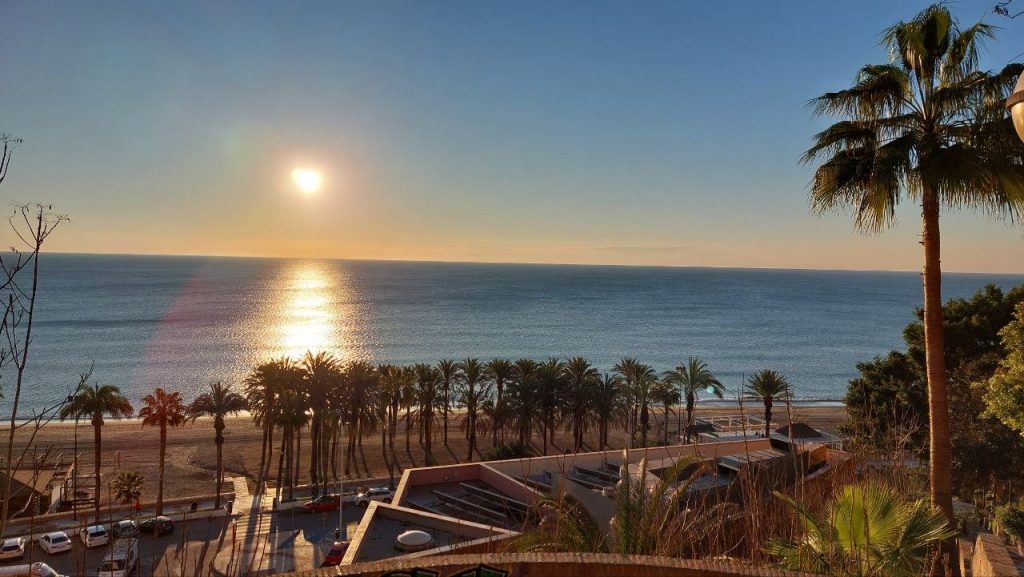
The taxi sped along shimmering tarmac, past a beer factory, down towards the tideless Mediterranean. The Don Pablo stood above the promenade, palm trees swaying between busy chiringuitos, rollerblading children weaving through strolling couples.

‘You’ll love it here, Jamie,’ Maddie said. ‘There are always lots of children. You’ll make friends.’

They checked in, took the lift to the ninth floor, and unlocked Room 911. Jamie swiped the keycard with the excitement of Christmas morning.

The smell hit Paul instantly: the nostalgic mix of stale suncream, faint bleach, warm varnished furniture — the essence of childhood holidays.

Above the bed hung a tapestry of the Last Supper.

‘Is that Jesus, Dad?’ Jamie asked.
‘Yes.’
‘And the one leaning on him — that’s Judas, right? The friend who betrayed him?’
‘Yes, son, that’s right.’

‘No,’ Maddie corrected softly. ‘That’s John, his closest friend. Judas is the one holding the bag of money.’

‘Really? Whatever,’ Paul muttered, impatient.

‘If Jesus was God, Dad, why did he have to die?’ Jamie pressed.
Paul hesitated. ‘I don’t really know.’
‘Maybe it was to show how much he loved us. Like Mum,’ Jamie said quietly.

Paul shot a glance at Maddie. Jamie, sensing he had touched a nerve, snatched up Terence, his Angry Birds toy, and bounded onto the balcony.

‘Look, Terence, the sea!’ he announced.

Below, families clustered around the pool, children splashing while parents dozed on sunbeds. Across the road stretched the beach, waves crashing harder than seemed reasonable on such a windless day.

‘Dad, why’s the sea so rough if there’s no wind?’
‘It’s the moon,’ Paul declared confidently. ‘It pulls on the sea like a magnet.’
Jamie nodded, satisfied.

Later, by the pool, they noticed the German man again — the snorer from the plane. With him sat his wiry son, a blonde woman with broad shoulders, and a pretty girl on the brink of adolescence. Jamie watched her flick her hair with unconscious poise, then turned his attention back to the pool.

The boy introduced himself. ‘I’m Lukas. We live in London. My dad is a doctor. He works in Africa sometimes.’ He grinned. ‘I’m nine. How old are you?’
‘I’m seven,’ Jamie replied eagerly, and they plunged together into the freezing water.

Over the next days, Lukas and Jamie were inseparable: pool, beach, games, laughter. Sometimes Lukas’s sister, Carla, joined them with her endless silly jokes that made Jamie laugh harder the less funny they were.

One afternoon the families shared lunch at a chiringuito. Maddie warmed to Petra, Lukas’s mother, and they talked about raising children abroad. Paul listened to Dominik — the German father — tell stories of medicine in Africa.

They were humbling tales, full of lives saved and lost. Paul felt suddenly small, his job in Shell’s London office seeming shallow by comparison. He also noticed how little Dominik ate, despite his size. Dominik explained, matter-of-factly, that a rare glandular disease made him obese regardless of diet or exercise.

Paul was chastened; his prejudices felt mean and petty in the face of the man’s quiet dignity.

As they lingered over coffee, Jamie piped up. ‘Dad, didn’t you say the moon makes the waves? But it isn’t windy…’

Dominik smiled, poured mineral water into a saucer, and tilted it until the liquid sloshed over the rim.

‘The Mediterranean is like this basin. The water slops because of the earth’s rotation. And some waves start far away, where the wind is stronger than here.’

‘Oh,’ Jamie said, disappointed but thoughtful.

The next day, Paul and Maddie decided to stay at the hotel. They were tired, and perhaps — Paul hoped — ready for some time alone.

‘Please, Dad, can I go to the beach with Lukas? It’s their last day!’ Jamie begged.

Paul hesitated, then caught Maddie’s eye. The look they shared made his decision.

‘All right,’ he said. ‘But be careful.’

Jamie hugged him tight. ‘Love you, Dad.’ Then he grabbed his towel and flip-flops and ran towards the beach, smiling all the way.

Back in Room 911, Paul and Maddie lay together, finally free of interruption. The midday sun pressed against the balcony doors, and outside the sea continued its ceaseless rhythm.

On the beach, Jamie waited by the water’s edge. Lukas wasn’t there yet. He stepped into the waves, remembering Dominik’s saucer, thinking how the sea slopped and pulled, alive with its own hidden force.

Above, Paul and Maddie surrendered to their closeness, lost in each other. Their pleasure also came in waves. Breath-taking undulations, larger and larger and louder and louder.

Seconds later came the largest and loudest wave of all, furious, foaming, final. And not unlike the one that, at that very moment, came crashing over Jamie, carrying his small body out into the indifferent sea.