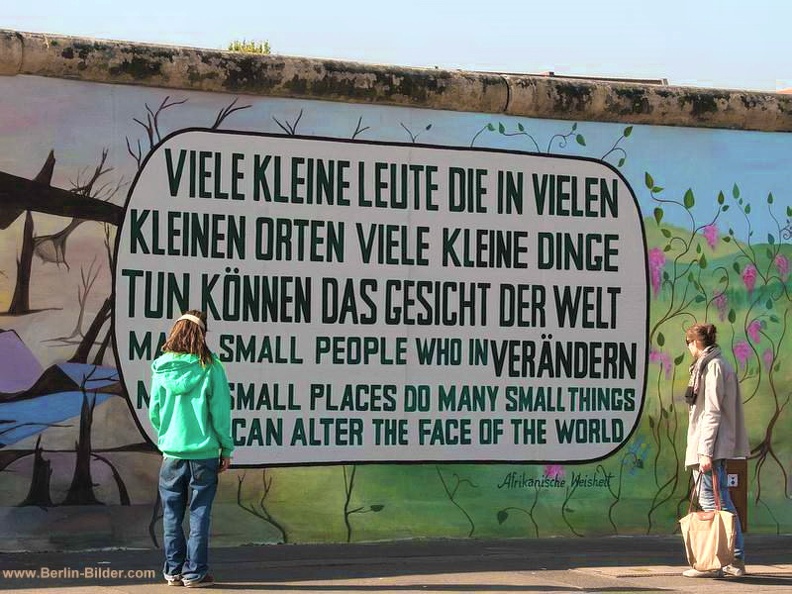
 What one person cannot do alone — and what millions can still do together.
In a time of escalating global conflict and war, many people are asking the same question: what can one individual actually do?
Almost everyone I speak to says the same thing. On trains. In cafés. On the street. Among friends.
“Nothing.”
What can I do? I am one person. One voter. One consumer. One voice. The machine is too big. The war is too far away. The system is too entrenched.
It sounds like realism. But it is something closer to resignation.
At the time of writing, this is not an abstract question. The United States and Israel are engaged in a widening military campaign across Iran and the region, with consequences already extending into Lebanon and beyond. Civilian infrastructure has been hit. Escalation remains a real possibility. The language of expansion and power is no longer confined to the margins.
And yet, in the face of all this, the most common response remains the same: there is nothing I can do.
No one person can stop a war alone. That is true. But it does not follow that one person has nothing to do. It only means that conscience must become collective before it becomes consequential.
Every system of violence depends not only on leaders, generals, and ideologues, but on millions of smaller permissions: purchases, habits, silences, career calculations, and the daily decision to do nothing because doing something feels futile. That is where power really sits.
We do not have to look far, in my adotped country, to see both what passive compliance can enable and what collective refusal can undo.
Where pressure comes from
We tend to imagine power as something distant: governments, armies, corporations. And of course, it is. But it is also embedded in the ordinary flows that sustain those systems: money, attention, legitimacy, cooperation.
Remove enough of those, and even large structures begin to strain.
As Charles Eisenstein has argued, modern systems are often more fragile than they appear. Confidence depends on participation. Withdraw participation at scale, and the system feels it.
The point is not that one person can bring about collapse. The point is that systems depend on millions of people continuing to cooperate. Which means that non-cooperation matters too.
Not expression, but leverage
Much of what passes for protest today is expressive. It allows us to signal disapproval, to feel aligned, to release moral tension. But expression is not the same as pressure.
Pressure is slower, less visible, and more demanding. It involves changing behaviour, not just declaring opinion. It involves cost.
If anything is to change, the question is not what we feel, but what we are prepared to do differently.
What can actually be done
None of what follows is dramatic. That is precisely the point. These are actions available to ordinary people, within the law, that become powerful only when they are repeated, shared, and sustained.
Speak clearly
Not “this is terrible.” Say what you oppose, what you want changed, and who has the power to act. Silence is easy to ignore. Clarity is not.
Write, then write again
One message can be dismissed. Patterns cannot. Ask for a position, not a platitude. Follow up.
Use money deliberately
Reconsider where you bank. Review what your investments support. Cancel subscriptions tied to companies you wish to avoid. Move spending where you can. Systems built on constant inflow notice outflow.
Recently, after 20 years of brand loyalty, I shut down my Apple eco-system. I now use European-based Proton Mail, Calendar and Drive and I write using Linux Mint and open source software. I’ve discovered that I am not alone.
Boycott with focus
Vague refusal achieves little. Targeted, visible refusal accumulates. Choose specific companies or sectors. Be consistent. Make your reasons public.
Pressure the institutions around you
Your university, your workplace, your church, your professional body. Ask what they fund, who they partner with, what position they take.
Institutions prefer neutrality. Pressure forces articulation.
Organise—and keep going
Movements rarely begin large. They begin with a handful of people who decide to act together and to continue acting.
Continuity matters more than size.
Show up
Demonstrations are not sufficient, but they are not meaningless. Presence, visibility, repetition—these change the atmosphere in which decisions are made.
Support truth and relief
Support serious journalism, legal work and humanitarian organisations. Wars continue more easily when they are obscured.
Turn agreement into action
Agreement has no effect until it is organised. Exchange names. Set a date. Do one thing. Repeat.
What this requires
None of this is easy.
It requires persistence rather than intensity. Discipline rather than outrage. Coordination rather than isolation.
It also requires something else: the refusal to adopt the logic of the thing one opposes.
If protest becomes only anger, only dehumanisation, only the search for enemies, it begins to mirror the structure it resists. The aim is not to reverse roles within the same system, but to alter the system itself.
It is easier to argue about geopolitics than to examine the small ways in which we continue to cooperate with it.
That is slower work. But it is more durable.
Conclusion
No one person can stop a war.
But wars do not continue by themselves. They continue because millions of ordinary people, in thousands of small ways, continue to cooperate with the systems that sustain them.
Withdraw enough of that cooperation — financially, politically, socially, publicly — and pressure begins to build.
The question is not whether you can do everything.
It is whether you are willing to do something.
And whether enough of us are willing to do it together.
“The sad truth is that most evil is done by people who never make up their minds to be either good or evil.”
— Hannah Arendt