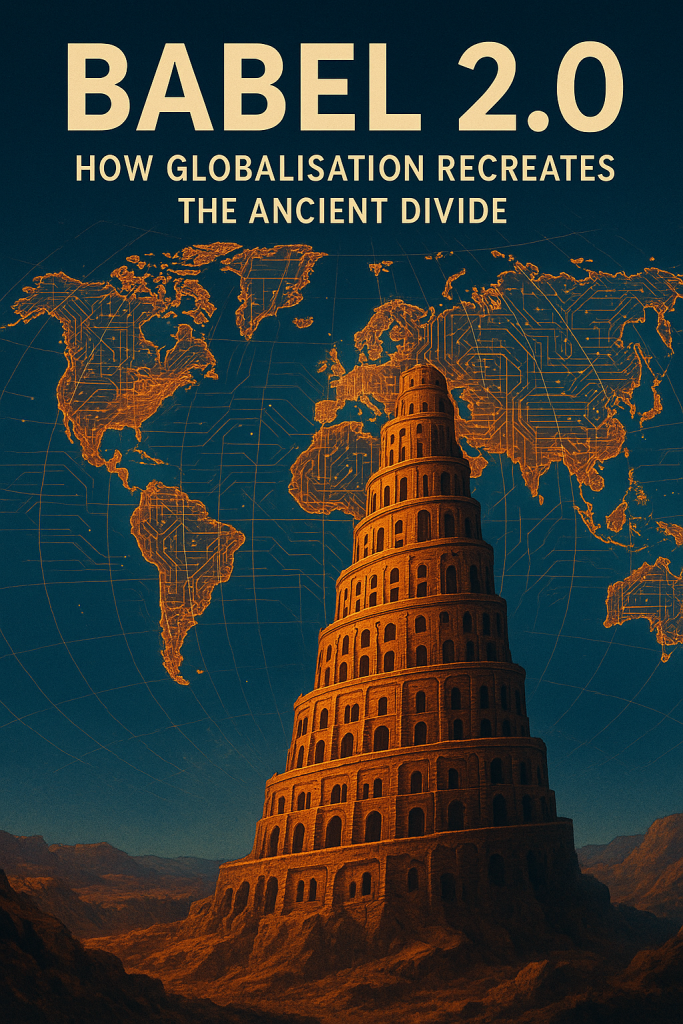
Why Has Globalisation Increased Division Instead of Unity?
Globalisation should have been our great humanising force. For the first time in history, large numbers of people can travel freely, study abroad, work internationally, and encounter cultures that would once have remained distant and unknown. We have access to films, music, literature, foods, and languages from every continent. On paper, this should have produced an age of empathy. A century in which the old barriers of race, nationality, and religion dissolved into shared humanity.
Yet the opposite has happened. As the world has opened up, political identity has hardened. Populist nationalism has surged: Donald Trump in the United States, Viktor Orbán in Hungary, Vladimir Putin in Russia, and similar strongman figures elsewhere. Racism, religious extremism, conspiracy thinking, and tribal rhetoric are resurgent. The more connected the world becomes, the more threatened people seem to feel.
This contradiction is not new. It is the old story of the Tower of Babel. Human beings build upward toward unity, creativity, and common purpose—yet something in us fractures, resists, and disperses. Even if we don’t read that story religiously, it is psychologically precise. The closer we come to real integration, the more fear arises: fear of loss of identity, loss of control, loss of status.
Globalisation has consistently been experienced not as shared enrichment but as competition. The immigrant is framed not as a neighbour, but as a rival. Cultural diversity is discussed not as dialogue, but as dilution. Political rhetoric encourages the idea that “our” way of life is being erased. The result is defensive nationalism and, increasingly, violence.
This is not inevitable. The problem is not globalisation itself, but the absence of global solidarity to accompany global interdependence. We have integrated our economies, but not our ethics. We have connected our markets, but not our imaginations.
So the question is: How do we reverse the tide? How do we turn globalisation into a force for peace, dignity, and cooperation rather than division and resentment?
Here are three foundations:
1. Global Education that Teaches Perspective, Not Propaganda
International exchange programs cannot simply be tourism or language practice; they must cultivate the ability to see oneself from the outside. To understand how one’s culture appears to others, how history shapes identity, and how dignity must be mutual. Education that only reinforces national narratives will always produce suspicion, not solidarity.
2. Freedom of the Press, Protected by Law, Not Politics
Real democracy depends on the ability to critique power. When the press becomes the instrument of governments, oligarchs, or corporations, societies fracture along invented fears. The crisis at the BBC this week is not a local scandal—it is a warning. If journalism cannot report freely, citizens cannot think freely. And if citizens cannot think freely, they cannot live together freely.
3. Cross-Border Economic Cooperation That Shares, Not Extracts
The problem is not diversity—it is inequality. When globalisation enriches a few and impoverishes many, resentment is inevitable. But when globalisation supports fair wages, sustainable industry, ecological responsibility, and shared growth, it strengthens stability rather than fear.
In short: global interconnectedness must be matched with global empathy.
We already live in one shared world. The question is whether we will learn to behave as if that is true.
Unity is not naïve. It is the only realistic future we have.
“We may have different religions, different languages, different colored skin, but we all belong to one human race.”
–Kofi Annan