Why Populists Thrive in a Connected World

Why Has Globalisation Increased Division Instead of Unity?

Globalisation should have been our great humanising force. For the first time in history, large numbers of people can travel freely, study abroad, work internationally, and encounter cultures that would once have remained distant and unknown. We have access to films, music, literature, foods, and languages from every continent. On paper, this should have produced an age of empathy. A century in which the old barriers of race, nationality, and religion dissolved into shared humanity.

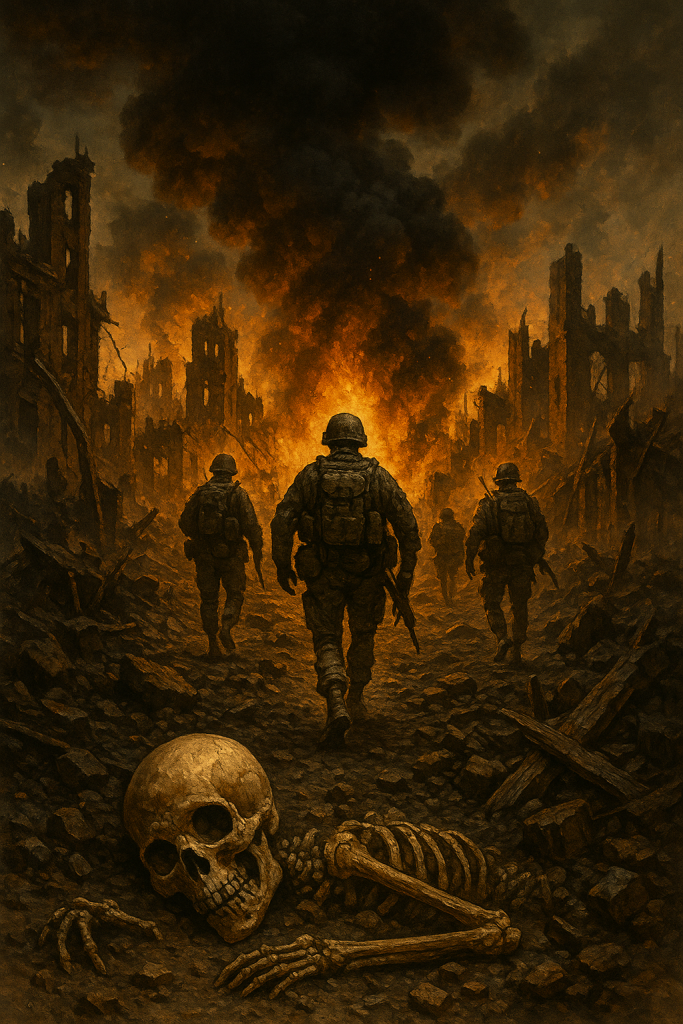
Yet the opposite has happened. As the world has opened up, political identity has hardened. Populist nationalism has surged: Donald Trump in the United States, Viktor Orbán in Hungary, Vladimir Putin in Russia, and similar strongman figures elsewhere. Racism, religious extremism, conspiracy thinking, and tribal rhetoric are resurgent. The more connected the world becomes, the more threatened people seem to feel.

This contradiction is not new. It is the old story of the Tower of Babel. Human beings build upward toward unity, creativity, and common purpose—yet something in us fractures, resists, and disperses. Even if we don’t read that story religiously, it is psychologically precise. The closer we come to real integration, the more fear arises: fear of loss of identity, loss of control, loss of status.

Globalisation has consistently been experienced not as shared enrichment but as competition. The immigrant is framed not as a neighbour, but as a rival. Cultural diversity is discussed not as dialogue, but as dilution. Political rhetoric encourages the idea that “our” way of life is being erased. The result is defensive nationalism and, increasingly, violence.

This is not inevitable. The problem is not globalisation itself, but the absence of global solidarity to accompany global interdependence. We have integrated our economies, but not our ethics. We have connected our markets, but not our imaginations.

So the question is: How do we reverse the tide? How do we turn globalisation into a force for peace, dignity, and cooperation rather than division and resentment?

Here are three foundations:

1. Global Education that Teaches Perspective, Not Propaganda
International exchange programs cannot simply be tourism or language practice; they must cultivate the ability to see oneself from the outside. To understand how one’s culture appears to others, how history shapes identity, and how dignity must be mutual. Education that only reinforces national narratives will always produce suspicion, not solidarity.

2. Freedom of the Press, Protected by Law, Not Politics
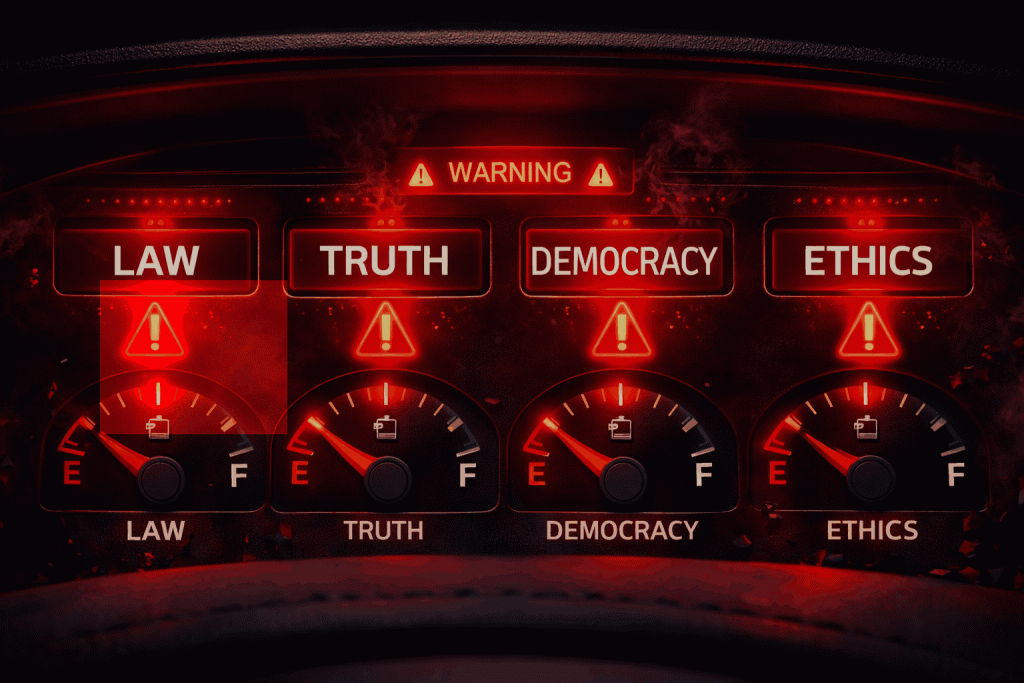
Real democracy depends on the ability to critique power. When the press becomes the instrument of governments, oligarchs, or corporations, societies fracture along invented fears. The crisis at the BBC this week is not a local scandal—it is a warning. If journalism cannot report freely, citizens cannot think freely. And if citizens cannot think freely, they cannot live together freely.

3. Cross-Border Economic Cooperation That Shares, Not Extracts
The problem is not diversity—it is inequality. When globalisation enriches a few and impoverishes many, resentment is inevitable. But when globalisation supports fair wages, sustainable industry, ecological responsibility, and shared growth, it strengthens stability rather than fear.

In short: global interconnectedness must be matched with global empathy.

We already live in one shared world. The question is whether we will learn to behave as if that is true.

Unity is not naïve. It is the only realistic future we have.

“We may have different religions, different languages, different colored skin, but we all belong to one human race.”

–Kofi Annan

The Blueberry Paradox: Why We Keep Destroying the Systems That Could Save Us

On my last day in Spain, I sat at a small café, watching three men take down decorations from the town’s recent festival. The bunting had hung across the square for days, colouring the white-washed walls with celebration. Now the tourists had gone home, and these men — quiet, anonymous, methodical — were returning the square to its ordinary face.

Their work is unremarkable. No one applauds. Yet without people like them, the whole “beautiful tourist city” collapses.
Without them, the photos don’t look charming.
Without them, the streets feel neglected.
Without them, the illusion breaks.

I found myself thinking about fishermen at dawn, hotel cleaners before breakfast, bin collectors at 4am. The quiet labour that keeps the world turning — labour that rarely receives dignity, respect, or fair pay.

Then I looked at my arm.
At the blueberries.

Yes — I have blueberries tattooed on my forearm. And no, it’s not whimsical. Or perhaps it is, but in the way truth sometimes hides inside whimsy.

The blueberries remind me that I cannot enjoy anything alone.
Not even my breakfast.

To eat a blueberry, I depend on soil, weather, farmers, packers, transport workers, supermarket staff, the climate not collapsing this particular year. My pleasure is communal, whether I acknowledge it or not.

Upside down, from a distance, the blueberries form a heart-shape. I didn’t plan that. But perhaps the body speaks before the mind is ready to believe.

The tattoo is a reminder:
You are held. Your life is made by many lives. You are not independent.

And so here’s the question that came to me in that Spanish square:

If we know we are interdependent, why do we build societies that pretend we aren’t?

Why do we reward the illusion of the “self-made individual” while the world is built by the unseen hands of others?

Why does the fisherman earn less than the financier?
The cleaner less than the consultant?
The bin collector less than the politician?

It is not rational.
It is not moral.
It is not even economically coherent.

It is, however, familiar.

And this — whether people like to admit it or not — is where Marx enters the conversation.

Marx’s Point Was Never “Everyone Should Be the Same”

Marx’s central claim was beautifully simple:
Human labour creates value.
So the people who create value should benefit from it.

That’s it.
That’s the hinge.

Marx wasn’t calling for laziness, or enforced sameness, or the death of creativity. He was pointing out that societies become obscene when those who create the conditions for life (food, sanitation, infrastructure, care) are treated as disposable.

He believed in dignity through shared labour.
In contribution as meaning.
In justice as the redistribution of the wealth that labour creates.

Which is why, though he rejected religion, Marx comes surprisingly close to Jesus.

Jesus also preached the reversal of hierarchy:

“The last shall be first, and the first last.”

Not metaphorically — economically, socially, relationally.

Both men looked at society and said:

This is upside down.
We can live differently.

Both pointed to community over competition, relationship over possession, need over greed, dignity over dominance.

And yet —
we have not built the world either of them imagined.

Not once.
Not anywhere.
Not for long.

So the question is no longer Was Marx right?
Or Was Jesus right?

The question is:

What stops us from building the just society both of them saw so clearly?

The Answer Is Not Economic. It’s Psychological.

We call it capitalism vs. communism
but the real struggle is fear vs. trust.

We hoard because we are afraid there won’t be enough.
We compete because we are afraid of being overlooked, replaced, forgotten.
We dominate because we are afraid of being powerless.
We cling to hierarchy because we are afraid of being ordinary.

Fear is the water we swim in.
Fear is the undecorated square after the festival is taken down.
Fear is the silence in the early morning before the day begins.

Marx underestimated fear.
Jesus named it, but was killed for it.

And every system we have built has collapsed for the same reason:

We would prefer to be safe than to be equal.

The Failure Was Never Marx’s. It Was Ours.

We say “communism failed” as if ideology collapsed of its own weight.
But ideas don’t fail.
Systems don’t fail.

People fail.

We fail because we want justice until justice requires something of us.
We want equality until equality asks for our privilege.
We want community until community interrupts our autonomy.

We want the kingdom of God
without the cross.

We want Marx’s dignity of labour
without surrendering status.

So we keep building worlds in which:

  • the blueberry appears magically on the table

  • the labourer remains invisible

  • and we pretend we did this alone.

The Blueberries Again

I look at my arm.
The tattoo.
The accidental heart.

A reminder that interdependence isn’t an ideal —
it’s already true.

We just live as if it isn’t.

The question is not whether a just society is possible.
We already rely on one.
Every day.
Every meal.
Every building.
Every service.
Every breath of shared infrastructure.

The question is simply:

When will we live as though we know it?

And perhaps the first step toward a better society
is simply learning to say:

Thank you.
To the fisherman.
To the street worker.
To the invisible hands.
To the ones who keep the world turning
so that the rest of us can pretend we did it ourselves.

The mirror we all hold

“For now we see only a reflection as in a mirror; then we shall see face to face. Now I know in part; then I shall know fully, even as I am fully known.”
— 1 Corinthians 13:12

 In the Bible’s finest chapter on love, we find the core of what all human beings seek: to know the truth and to be loved unconditionally. Some are forced to abandon the search by war, famine, or disaster. Others numb it with money, power, routine, or religion. But painters, composers, writers, and prisoners ache until the search is done. Life may be a poor player strutting its hour upon the stage, yet it remains a miraculous gift. In my own search, this is what I have learned:

Our reality is socially constructed. It is not simply out there, an objective truth. It is shaped through interaction, language, and shared meaning. What we take as natural or real is the result of human processes. We create culture, institutions, and practices until they appear objective, unquestionable. Society is a human product, and humans are also a product of society.

So, God is not dead; she was never alive. Human beings are distinguished by language, and only with language could we invent the search for truth and love and confront our fear of death. We created narratives to explain, console, and control — each shaped by its ethnicity. When those narratives masquerade as religion, they breed arrogance and division, and evil flourishes in the shadows they cast.

In postmodern times, these grand stories have been dismantled, leaving behind fragments of wisdom, still priceless, still relevant. With their collapse comes the dissolution of absolute truth, the perfect mirror. We are left with fractured mirrors that blur and distort. We will never see face to face. We will never fully know.

Yet one certainty remains: we are constellations of atoms, stardust reassembled by chance and time, hurtling around our sun on a rock at 67,000 mph. DNA coils like ancient runes in every cell, issuing silent instructions: become, live, persist. From this choreography comes breath, thought, memory: a mother’s laughter, longing for distant places, a lover’s hand in the dark. We invent gods and heroes, build cathedrals and poems, grieve, and love. All this from fragile molecules wrapped in skin. Just chemistry. An echo of evolution. And yet: is it not a miracle that matter dreams at all?

As animals without God, we are capable of both the sublime and the grotesque, like a spider whose web can dazzle, yet devour. Both poles dwell in every heart. When misaligned in childhood, they consume more than they weave. Our destruction harms others as much as ourselves. Only when such misalignment is brought into the light, described and objectified, can disaster be averted. There is no cure, but it can be managed.

And yes, we need others. The fool thinks he can do it alone, with drugs or double lives. But we are social creatures, destined to create and to destroy together. We are the same story, written in different ink, linked like islands beneath the ocean. We need one another to hold up the mirrors in which we might glimpse truth — and love.

Love is the fiction we live and die for. Our need for sex and closeness becomes sonnet and story, until the invention feels more real than the words that birthed it. Yet in that fiction, light is found. And only in that light do the mirrors reflect enough to end our search.

The arts are our vehicle for this search. Education is archaic. It is preserved that way by an oligarchy masquerading as democracy to secure the success of its offspring. Were curricula ever to be revised, the arts must not be replaced by AI or science, but contextualised by them. Only then might humanity move toward security and enlightenment, instead of decline and crime.

I’d be very interested in your comments.

The Architecture of Reality

What seems eternal is often only the echo of human agreement

Most of us move through life believing that reality is simply “out there”—something fixed and solid, waiting for us to discover it. But over time, I’ve come to see that what we call “reality” is not just given to us; it is made, sustained, and passed on through people.

Think about it: the rules of marriage, the value of money, the rituals of religion or education—none of these fell from the sky. They were created by people, agreed upon, repeated, and eventually treated as if they had always been there. A piece of paper becomes “wealth.” A ceremony becomes “holy.” A set of expectations becomes “the way things are.”

The most fascinating part is that once these human creations are in place, they begin to feel objective, untouchable, almost like laws of nature. We grow up inside them, and they become the air we breathe. By the time we are adults, much of what we take as “normal” or “true” is simply what has been handed down to us.

And yet, these worlds are not neutral. Some people and institutions get to decide which knowledge counts, which voices are heard, which rules are legitimate. That is why two cultures—or even two families—can live in entirely different realities without ever noticing how constructed those realities are.

For the individual, this becomes especially challenging when the world we grew up in collides with the wider world outside. The lessons we learn at home—about trust, love, authority, or shame—are sometimes at odds with what we encounter later in school, work, or society at large. When these two realities clash, it can leave us confused, even broken inside, as if we’re expected to live two lives at once.

I’ve come to believe that the way forward begins with awareness. If we can see that these worlds are made by people, then we gain the freedom to question them. We can decide what to carry with us and what to lay down. We can stop being passive products of two conflicting realities and instead become active authors of our own lives.

At its heart, this is not just about society. It’s about self-knowledge, grace, and the courage to treat ourselves kindly as we sort through the contradictions. The more we learn to accept ourselves, the less power those clashes have to tear us apart.

In the end, we both build the world and are built by it. The challenge is to remain awake to that truth—and to choose, with as much wisdom as we can, the world we want to live in.