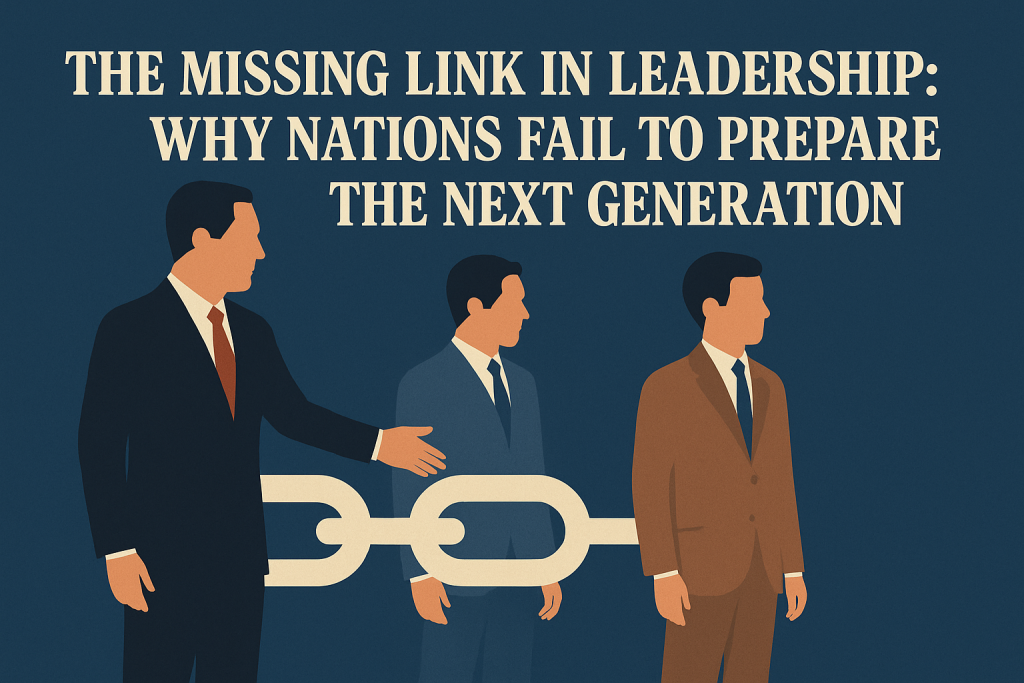
The Missing Link in Leadership: Who are you preparing to replace you?

Over the last few days, I’ve been reflecting on something that almost nobody talks about, yet it quietly shapes the political and economic stability of entire nations: the absence of intentional discipleship—or whatever secular term we prefer—among significant leaders.

Call it mentoring, call it succession planning, call it “forming the next generation.” But the idea itself is ancient: I do it and you watch me; you do it and I watch you; now you do it on your own. Most successful cultures in history depended on it. Yet today, it is almost entirely absent in politics, business, and public life.

And we are paying the price.


1. Politics Without Apprenticeship: Why Every Transition Is a Crisis

Look at almost any Western democracy and you’ll notice the same pattern: when a leader falls, nobody has the faintest idea who will replace them.

    • When Boris Johnson collapsed, nobody was preparing themselves—or being prepared—to step in.
    • Liz Truss, Rishi Sunak, and even Theresa May were not household names with long apprenticeships behind them. They were simply the next names in a Rolodex that nobody had ever looked at.
    • In the corporate world, nobody outside Cupertino had ever heard of Tim Cook until Steve Jobs died. Cook was extremely competent—but invisible.

Leadership emerges by accident, not formation.

Even in Germany—historically better at structured, team-based governance—the same problem now shows. Under Angela Merkel, we at least knew her ministers. If health, education, or foreign affairs made the news, it was the responsible minister speaking, not Merkel herself. There was a sense of team, of distributed competence, of the German belief that no one person can or should dominate every conversation.

But even then, there was no visible apprentice. No one standing next to her, learning, questioning, absorbing, preparing. When she stepped down, the vacuum opened.

Fast-forward to today, and the contrast is severe. Germany has ended up with Friedrich Merz—almost the polar opposite of Merkel in style, values, and public ethos. The shift is not just political; it’s generational and philosophical. It is what happens when leadership is not passed on but simply replaced.


2. The Danger of Blind Replacements

A country cannot thrive if every transition resembles a blind date.

Democracies need continuity, not clones—but at least a thread connecting one chapter to the next:

    • Shared institutional memory
    • A carried-forward vision
    • Stability in economic and social policy
    • Someone who has made mistakes privately before making them publicly

Instead, we jump from one unfamiliar figure to another. We “discover” a new potential leader the same way we discover a new toothpaste at the supermarket: whatever is placed at eye level becomes the default option.

And voters are expected to trust people they have never had the chance to watch, listen to, or grow accustomed to.


3. Corporate Life: Exactly the Same Problem

The same dysfunction exists in industry.

Most FTSE100 or Fortune500 companies have:

    • “leadership pipelines”
    • “talent funnels”
    • “succession plans” in binders

But very few have real relational apprenticeship:

    • Nobody spends two years shadowing a CEO.
    • Nobody grows up inside a leader’s thinking.
    • Nobody is intentionally shown how to hold the weight of power.

So transitions become fragile. Massive instability follows. Cultures collapse when their figureheads move on.

You saw it with Jobs → Cook.
You saw it with Gates → Ballmer.
You saw it with nearly every major bank pre-2008.

This is not an HR problem. It’s a civilisational one.


4. Why Discipleship (Not Just Mentoring) Actually Matters

Mentoring can be a coffee once a month. Coaching can be transactional. Consulting can be outsourced.

Discipleship is different: it means forming someone through proximity, vulnerability, imitation, failure, and shared responsibility.

It means:

    1. I do it; you watch.
      The next generation witnesses how problems are carried, how crises are handled, how decisions are made.
    2. You do it; I watch.
      Mistakes happen in a safeguarded environment where correction is possible without public humiliation.
    3. Now you do it on your own.
      By the time leadership is handed over, the nation already knows who this person is—and why they should be trusted.

This is not religious; it is simply human. Every craft, every guild, every durable culture has always worked this way.

Except modern politics and modern corporations.


5. Preparing One Generation Down

If we want stability, we must think at least one generation down:

    • Who is learning the skills?
    • Who is absorbing the vision?
    • Who is gaining credibility in public life before holding office?
    • Who is confident enough to lead, not because they are ambitious, but because they are prepared?

Nations fall apart when nobody knows who is next.
Nations thrive when leadership is a relay race, not a wrestling match.

We cannot talk about the future without preparing the people who will carry it.

“There is no success without a successor.”  –  Peter Drucker

Unseen Innovation: Europe’s Arcadian Missions in Agriculture and Beyond

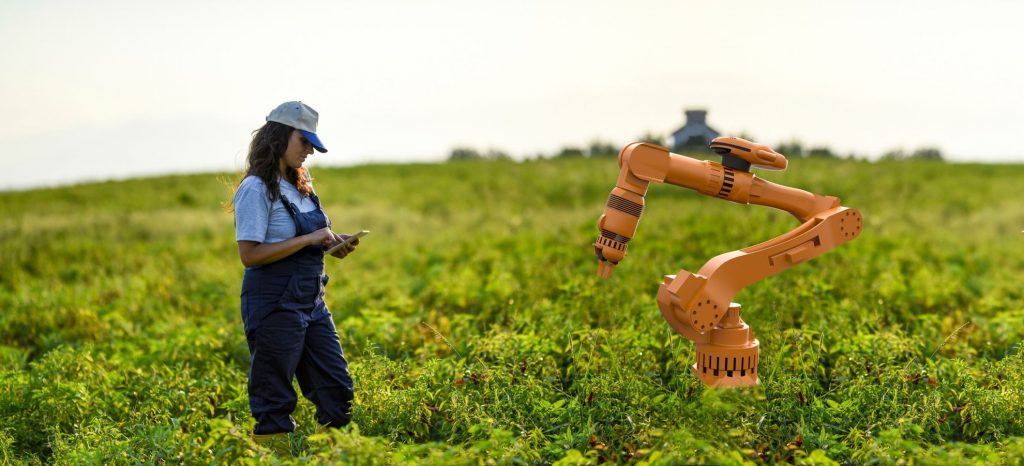
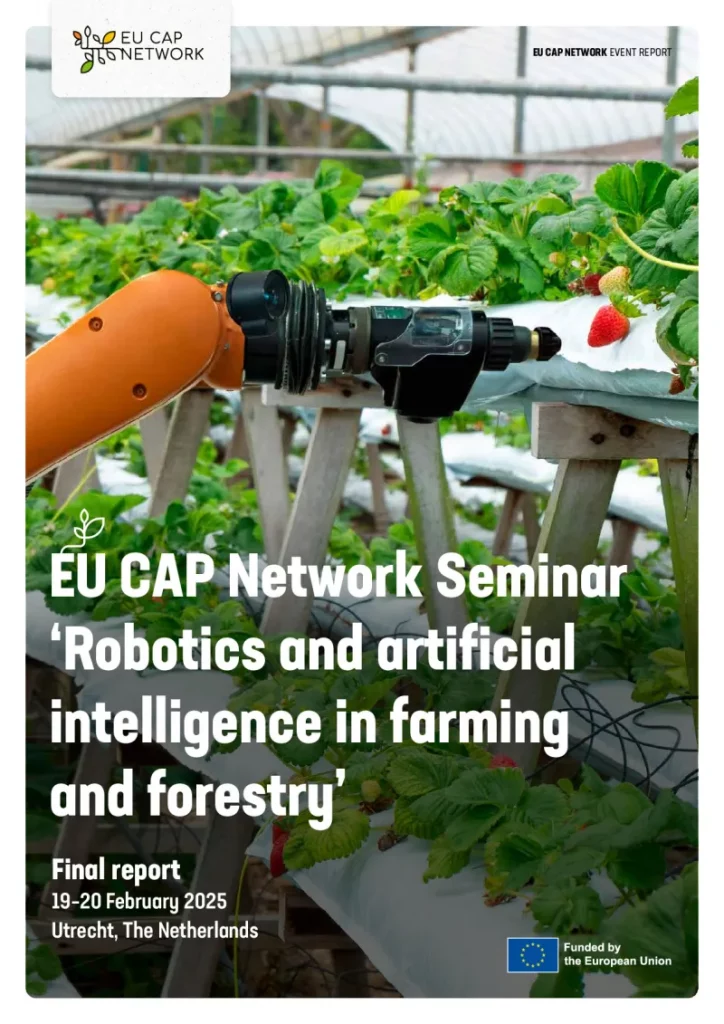
Innovation rarely arrives with fanfare. It doesn’t always make the headlines. Instead, it often unfolds silently in the fields, the orchards and the hinterlands — where precision matters, human know-how meets technology, and tomorrow’s systems are shaped today. One such endeavour is the AgRimate project: a multi-national European initiative that demonstrates how real-world research quietly drives systemic change.

A good example: AgRimate

Launched under the Horizon Europe programme (grant agreement 101182739), AgRimate brings together 11 partners from Spain, Finland, Italy, Greece, Germany and Ireland.  Its target: to transform pruning practices in olive groves and vineyards through AI-driven decision support, augmented reality (AR) assistants and robotic systems. By 2030, the project aims for a technology-readiness level of 7 or more, to validate in real-world field trials across Spain and Greece.

Among its goals:

    • Integrate sensor networks and drone data to feed AI models that learn from expert pruners — combining tradition and technology.
    • Deploy AR-based training and guidance tools to enhance worker competence and safety.
    • Design robotic platforms and exoskeletons to reduce physical strain and improve productivity in high-value cropping.
    • Ensure human-centred design: evaluating how AI and robotics impact worker well-being, autonomy and skill development.

This is farming at the intersection of cognition, competence, machine intelligence and everyday labour: exactly where digital transformation meets human factors.

“The soil is the great connector of lives, the source and destination of all.”
— Wendell Berry

Why such projects matter

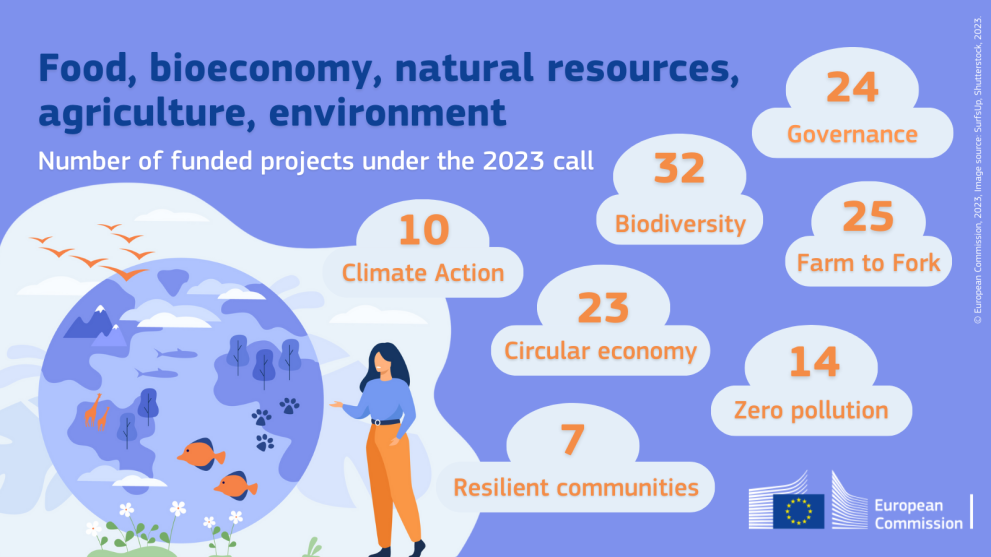
While big science programmes grab attention, applied-field projects like AgRimate deliver the operational breakthroughs — the nuts-and-bolts tools that farmers will use. In the EU, research shows that every €1 invested in agricultural innovation can yield up to €10-11 in return over 25 years.

And financially: Horizon Europe carries a budget of about €93.5 billion (2021-2027). Within that, agriculture, bioeconomy and natural-resources projects account for roughly €9 billion of dedicated support. ([European Commission])

Such funding enables:

    • innovation in digital farming, robotics and AR
    • capacity-building and competence-development in rural areas
    • sustainability, productivity and social inclusion
    • spill-over benefits beyond Europe: from knowledge export to global partners

Beyond agriculture: the hidden ecosystem

Though agriculture provides a compelling lens, research-funding stretches across domains. For example:

    • The Erasmus+ programme fosters mobility and competence across borders, equipping educators and learners for global challenges.
    • Health-related initiatives like EU4Health support medical research and pandemic resilience.
    • Digital-technology programmes (digital Europe) underpin innovation in every sector.

Together, they create a background mosaic of everyday research infrastructure — quiet, distributed, and deeply impactful.

Global value, local roots

Projects like AgRimate don’t just upgrade a Spanish olive grove. Their tools, methods and models travel. Exoskeletons, AR training tools, AI-driven decision-engines: all are transferable to Latin America, Africa or Asia where smallholder farmers face similar labour constraints, skill gaps and sustainability demands. Research-driven competence models and embedded human-tech interaction frameworks are the heart of global agricultural progress.

Why we should pay attention

Often, we know about the big telescopes, the megaprojects, the splashy tech launches. But real change also happens quietly — in pruning trellises, orchards, farm-hands learning AR interfaces, complex sensor systems taking field-data at dawn. These are the systems that translate innovation into impact.

For professionals, researchers and rural practitioners alike, the message is clear: technology alone isn’t enough. It’s human competence, interaction design, usability, learning architecture and worker autonomy that bring tech alive. Projects like AgRimate embody that blend.

And for you — or for any practitioner, researcher or farmer — this is the invitation: monitor the unseen, celebrate the unsung, and recognise the spider-web of research beneath your everyday tools. Because behind those quiet fields, Europe is building the futures we’ll harvest tomorrow.

“Europe will not be made all at once, nor according to a single plan, but through concrete achievements which first create a de facto solidarity.”
— Robert Schuman, 1950

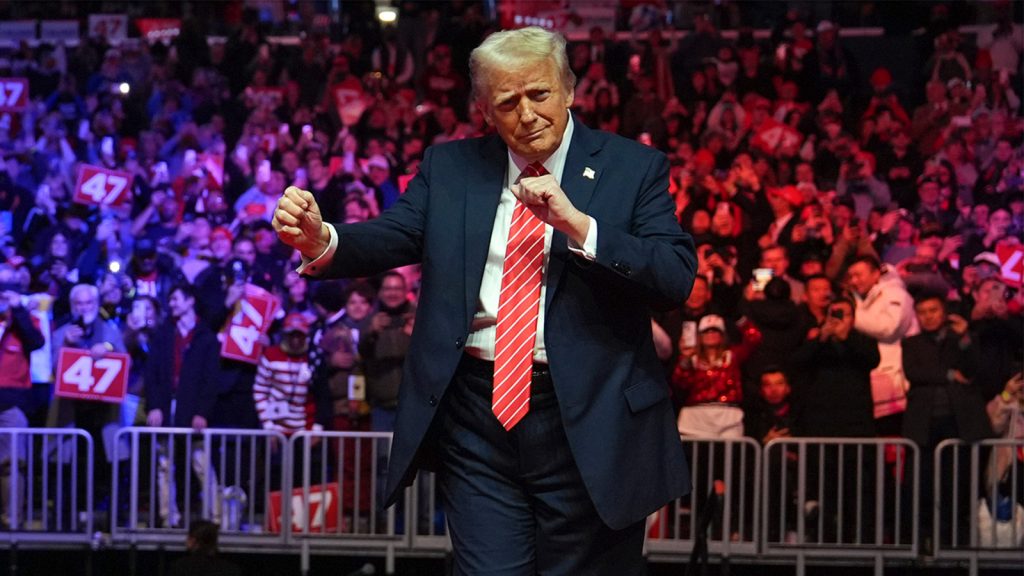
America First, America Finished? How Trump Is Shrinking a Superpower

Trump, Asia and the New World Order

When I was flying back and forth to Indonesia last year, something on the ground kept nagging at me more than the jet lag.

It wasn’t the traffic jams or the humidity. It was the cars.

Jakarta’s new car market is now a sea of logos many Europeans and Americans still barely recognise: BYD, Chery, Geely, Great Wall, Wuling. These aren’t curiosities anymore; they’re the default options on showroom floors and in middle-class driveways. China exported about 5.9 million vehicles in 2024, with Chinese brands now taking around 65% of their own domestic market and leading global export growth.

If you want to understand why Donald Trump’s isolationist “America First” project is actually accelerating America’s relative decline, start in a Jakarta car park, not in Washington.

Because while Trump shouts about greatness into a microphone, the centre of gravity of the real economy is sliding, quietly and empirically, towards Asia.

Asia’s Rise Is No Longer a Prediction — It’s a Measurement

Asia now accounts for around 49% of global GDP (PPP). North America and Europe combined have dropped to about 39%, down from 58% in 1980. The shift isn’t subtle; it’s structural.

China alone produces about 35% of global manufactured goods, more than the next nine countries combined. Its share of global exports has risen from 3.9% in 2000 to over 14% today, while the U.S. has fallen from 12% to under 9%.

This isn’t “cheating”. It’s performance.
And Asia is performing — relentlessly.

“America First” is being matched by “Asia Busy Working”.

Planes, Cars, Chips: The Quiet Transfer of Influence

In Southeast Asia, the consumer economy has already pivoted eastward. Chinese and Korean car brands have become aspirational. Japanese brands remain strong. American brands barely appear.

And in aviation, China’s COMAC is now producing the C919, a credible competitor to Boeing’s 737 — at exactly the moment Boeing faces delays, quality concerns and real reputational damage.

Asia is no longer assembling Western dreams.
It is building its own.

America First = America Alone = America Weaker

Trump’s worldview is dangerously simple:

    • America has been “ripped off”.
    • Trade is zero-sum.
    • Tariffs can restore greatness.
    • Cooperation is weakness.

But the real effects are the opposite:

    • Allies lose trust.
    • Asia builds alternatives.
    • Global supply chains simply route around the U.S.
    • Markets become unstable.
    • The very partners America needs are pushed away.

You do not protect leadership by insulting your allies.
You simply teach them how to live without you.

The Numbers: A Superpower Living Beyond Its Means

A snapshot of America today:

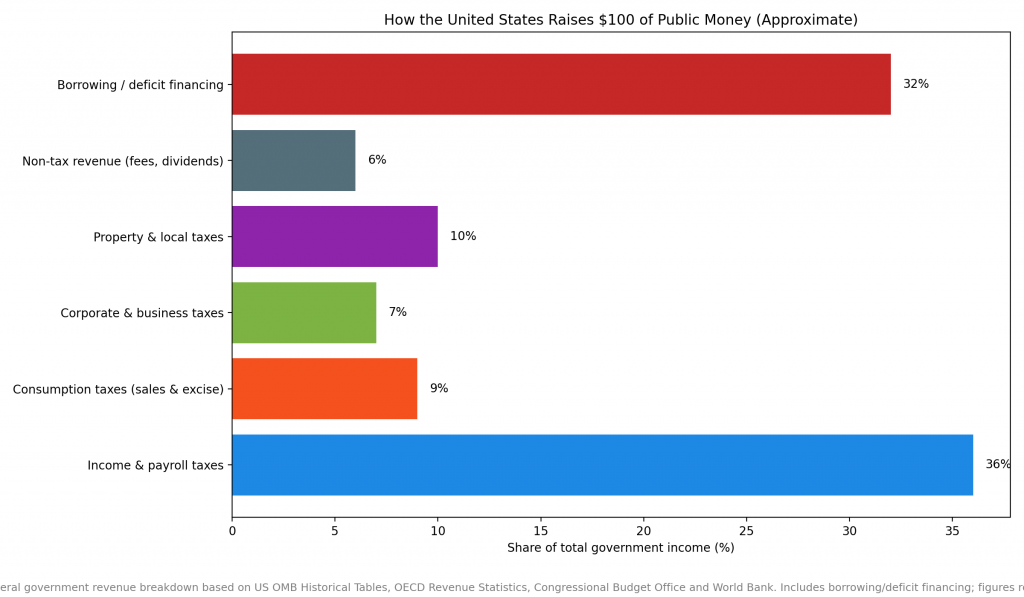
Debt: ~120% of GDP, on track to hit 134% by 2035.

Exports: falling relative to global share.

Education: PISA scores below OECD average in maths.

Health: life expectancy 2 years below other rich countries.

Credit ratings: downgraded due to political dysfunction.

None of this is solely Trump’s fault — but his policies accelerate every downward curve.

The Leadership Problem

The deeper question is moral and cultural:
How does a wealthy democracy choose a leader who is twice impeached, convicted on 34 felony counts, found liable for sexual abuse, repeatedly racist, proudly uninformed — and still treated as a serious statesman?

Even a young  YouTuber like Parkergetajob often articulates policy with more coherence than the President of the United States. That alone tells a story.

The decline of leadership is a decline of standards.
And a decline of standards is the beginning of national decay.

History’s Warning Labels

The fall of great powers follows familiar patterns:

    • Rome: internal corruption, political chaos
    • Ottomans: denial, nostalgia, refusal to modernise
    • Britain: moral exhaustion + economic overstretch

The common thread?
A preference for comforting myths over uncomfortable facts.

Trumpism is exactly that:
a mythology of greatness masking a reality of shrinking influence.

America’s Choice

America is still extraordinary — innovative, creative, wealthy. But greatness today requires cooperation, competence and credibility.

Trump offers none of these.
He offers slogans, ange, division and isolation.

And in a century defined by interconnected systems, a country that isolates itself does not become stronger.
It becomes smaller.

America won’t be destroyed by China or Europe or migrants.
It will be destroyed by the comforting lie that it doesn’t need the rest of the world.